
Shopping is an "Experience": How to Create "Enjoyment" That Wins Customer Hearts in the Age of AI
Albion × Channel Talk × StoreHero Discuss the Future of E-Commerce
In today's mature e-commerce market where products abound, customers are no longer just looking for "goods" — they want an "enjoyable shopping experience." But what exactly is that "enjoyment"? How can it be achieved online, or in conjunction with physical stores?
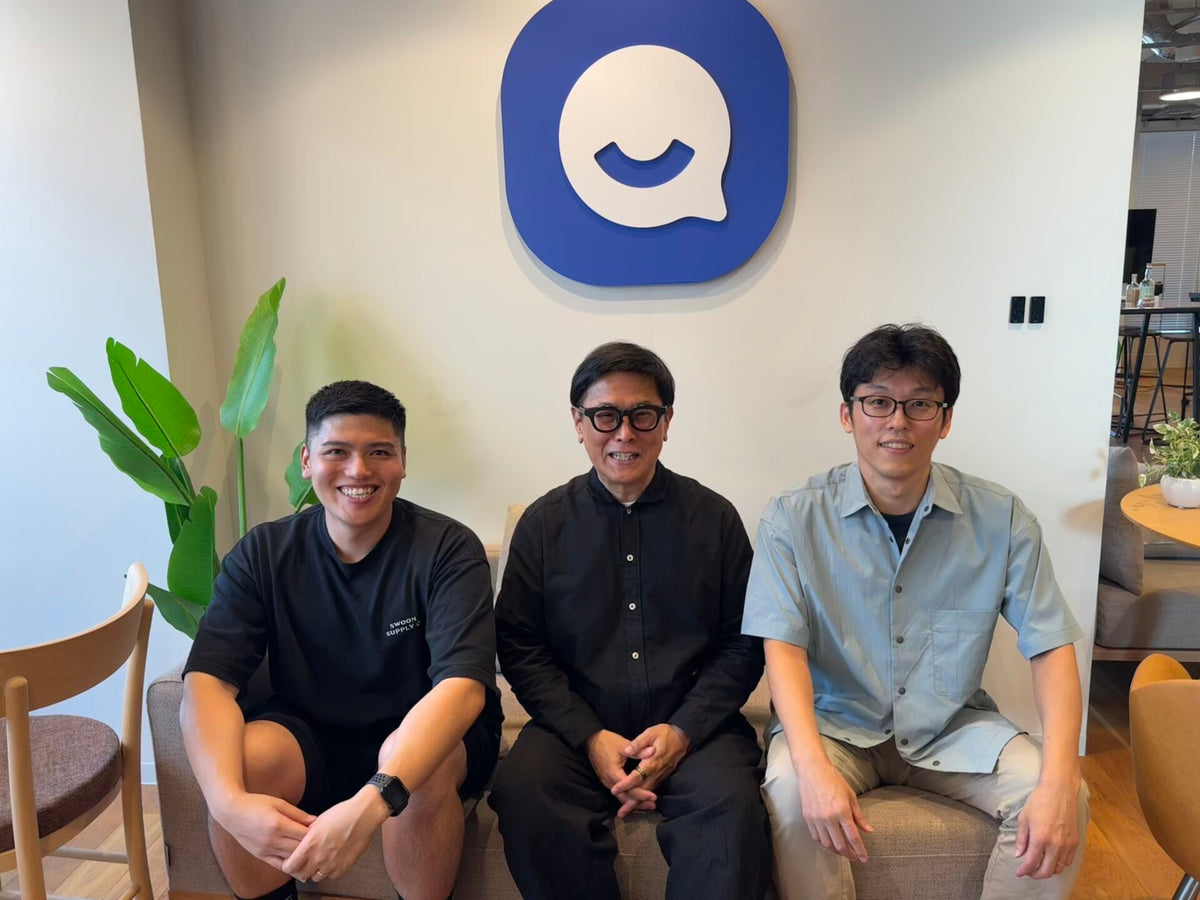
In this session, three companies came together: cosmetics brand "Albion," customer communication design platform "Channel Talk," and Shopify-powered growth partner "StoreHero." Under the theme of "making the shopping experience enjoyable," they held an in-depth discussion covering the ideal relationship between AI and humans, customer emotional curves, and the future of shopping.
Speaker Introductions
Albion Co., Ltd.
International Brand Sales Division, Domestic Sales Promotion Group Leader
Takayuki Sakakibara

[Background]
Joined Albion Co., Ltd. in 1990. After 20 years in wholesale sales to major cosmetics stores and department stores nationwide, he moved to the International Business Division, overseeing domestic and international marketing and sales for licensed brands. He currently manages the domestic rollout of ANNA SUI and PAUL & JOE. Since 2019, he has also been responsible for launching and operating the company's own online stores, having established online store sites for four brands.
Channel Corporation
Executive Officer & VP of Operations
Ryo Suzuki

[Background]
Joined Basic Inc. in 2016, handling recruitment, development, and evaluation systems in HR.
In 2021, joined foreign AI company Channel Corporation. After roles in CS, sales, marketing, recruiting, and business development,
was appointed Executive Officer.
Since 2025, VP of Operations. Oversees 4 divisions and drives profit maximization for the Japan region.
StoreHero Inc.
Co-founder & CEO
Junichi Kurose

[Background]
After graduating from the University of Tsukuba and completing his graduate studies at Kobe University, he joined Axiiz Inc.
As a director, he was involved in SaaS development and sales, eventually selling the company. He then joined Internet Infinity Inc. and TeamSpirit Inc., working in business development and sales/marketing — both companies subsequently went public. After serving as Country Manager at Ginzamarkets Inc., he founded StoreHero Inc. in 2019.
What Is the Shopping "Mind Curve"? The First Step to Enjoyment Is Not "Lifting Up" But "Not Letting Down"
Kurose: Today, we've gathered under the theme of "making the shopping experience enjoyable." As a starting point for this topic, I'd love to ask Mr. Sakakibara about the concept of the "shopping mind curve" that he advocates. Could you explain what it is?
Sakakibara: Of course. Unlike buying everyday items at a convenience store, shopping for fashion or luxury goods involves emotional ups and downs for the customer. I call this the "mind curve."
For example, if a customer walks into a store and immediately feels it's "dirty" or "smells bad," their emotions plummet. There's a common idea that the goal is to "lift" emotions by offering great products, but I believe that "not letting them drop" is equally important.
Kurose: "Not letting them drop," you say.
Sakakibara: Exactly. For instance, if a customer finds something they love but then has to wait 20 minutes at the register while being pitched a loyalty card, that hard-earned satisfaction takes a hit. On the other hand, if they open the product at home and find a "thank you" message inside, their mood lifts significantly.
It's important to both eliminate dissatisfaction and create moments that lift the customer's mood. This curve can be applied online as well, though the ways to achieve it differ from physical stores.

AI vs. Humans? The "Optimal Answer" for Customer Service That Customers Actually Want
Kurose: Mr. Suzuki, Channel Talk supports the joy of shopping through chat-based customer service. I'd love to hear your thoughts on the optimal balance between AI-driven service, which has become mainstream, and traditional human service.
Suzuki: When it comes to the enjoyment of shopping and the "optimal balance between AI and humans," I'm often asked about this — but honestly, I don't think there is one optimal "balance." What matters most is that customers are in a position to "choose" for themselves. Relying solely on AI isn't good, and letting inquiries pile up because humans are slow to respond isn't good either.
AI should be given the role of delivering information quickly, while humans should provide empathetic responses — the kind AI can't offer — as swiftly as possible. Having both options prepared is what's important.
There are also tendencies like men wanting quick answers from AI, while women prefer being encouraged through conversation. At Channel Talk, we once ran an experiment where we deliberately displayed both an AI option and a human staff option side by side. We initially expected people to prefer conversation (human), but surprisingly, many chose AI — making it clear that there's a strong demand for "fast answers."
The sense of "reassurance" from knowing you can choose either is what's important. That said, sharing and empathizing with feelings that are hard to verbalize — like "I'm sensing the arrival of autumn" — remains a distinctly human strength.
Experience Value Through Intentionally Blurring the "Boundary" Between Online and Offline
Kurose: Speaking of physical stores (offline), I'd like to ask you, Mr. Sakakibara. How does Albion connect online and offline to create "enjoyment"? I imagine there are experiences that can only be achieved offline.
Sakakibara: We deliberately avoid both "integrating" and "differentiating" between online and offline (stores).
Of course, there are things that can only be done online, and things that only a physical store can offer. But we don't try to forcibly merge them, nor do we draw strict distinctions between them.
We place importance on allowing customers to freely choose based on how they feel that day. Today they might feel like consulting in person at a store; tomorrow they might want the convenience of shopping online.
What matters is that whichever channel a customer chooses, we provide the best possible experience within that channel. By leveraging the strengths of each channel while meeting customer expectations, we believe the accumulated experience leads to genuine enjoyment.
Suzuki: That perspective is extremely important. We at Channel Talk also aim to deliver "the experience you'd expect in a physical store" — online.
For example, in a store, if a customer is standing in front of a shelf deliberating for a long time, a staff member would naturally say, "Are you looking for something?" That's a completely normal scene. Yet for some reason, once it becomes e-commerce, the inquiry window gets tucked into a corner of the page with a "help yourself" approach.
Channel Talk enables "proactive outreach" online, just like in a physical store. If a customer has been lingering on a specific page for a minute, a pop-up appears asking, "Is there anything I can help you with?" This is precisely an attempt to bring the offline customer service experience into the online world.
Kurose: I see. So the offline customer experience becomes a source of inspiration for online initiatives.
Sakakibara: Exactly. Rather than segmenting the customer experience by channel, I believe that deeply understanding customer behavior and emotions — and making the most of each channel's strengths — ultimately leads to an "enjoyment" that transcends the boundary between online and offline.
Identifying Customer "Enjoyment" Through Data and Intuition
Sakakibara: Something I'd like to ask is: how do you visualize "enjoyment" online? Mr. Kurose, how do you analyze customer "enjoyment" through data?
Kurose: Good question. Since emotions themselves are hard to observe, we can ultimately only capture them through "behavior." That said, I don't think "buying a lot" necessarily means a customer is "enjoying" themselves.
While purchase amount is a common metric, it alone isn't enough to judge. What I pay attention to is behavior like "visiting the website frequently" or "always showing up at every event" — regardless of whether a purchase is made. Coming back even when there's no specific errand suggests they're coming because they enjoy it.
Sakakibara: Indeed, visit frequency is an important metric.
Time on site is also a commonly tracked metric, but if it's simply going up, it may mean customers are getting lost on the site (experiencing frustration) — which could actually be a warning sign. If you can see that customers are genuinely engaging with the brand content you've prepared, and time on site is long as a result, then you can conclude it's a positive experience.
Kurose: I see. So data and the "intuition" or contextual reading behind it need to work together. Mr. Suzuki, what are your thoughts on this?
Suzuki: It's exactly a combination of data and intuition. Since Channel Talk can integrate with membership data, knowing that a customer "viewed 10 product pages" before coming to chat triggers an intuition that "this person is really torn."
From there, you can make a personalized recommendation based on those 10 data points. This is "personalization." Do it too aggressively and it feels creepy — "How do you know that?" — but finding the right balance where the customer feels "you really get me" is what's important.
Proactive "Outreach" Creates Reassurance and LTV
Suzuki: Another key thing is taking a "proactive action (outreach)" rather than passively waiting for inquiries to come in.
In a store, if a customer stands at a shelf deliberating for a long time, staff would say "Are you looking for something?" That's natural. In e-commerce, for some reason, that doesn't happen. Channel Talk has a feature that triggers a pop-up asking "Is there anything you need help with?" when a customer stays on a specific page for one minute.
What's interesting is that in some cases, even when this outreach doesn't necessarily lead to more chats, conversions still went up. My theory is that the "reassurance" of knowing you can always ask a question is what drives the purchase decision.
Kurose: That outreach sounds like it connects to LTV (Customer Lifetime Value) as well.
Suzuki: In fact, when a company introduced chat-based customer service, the LTV of existing customers didn't change much — but there was a remarkable difference in the 1-year LTV of new customers, depending on whether or not they had received live human service.
Those who received personal service clearly had a higher customer rank. This is because the communication of "deliberating, consulting, and then deciding" becomes a "memory (experience)" — not just a transaction (a single point in time). That experience becomes irreplaceable value that no other brand can substitute.

The Peak of Shopping Is the "I've Decided!" Moment. Make Checkout Stress-Free
Kurose: Speaking of customer emotions, I'm curious where the "peak" of Mr. Sakakibara's mind curve falls.
Sakakibara: We once conducted a survey, and the results showed that customer enthusiasm peaks during "the act of choosing," or at "the moment of deliberating, comparing, and finally committing — 'I'll go with this one!'" and also when "the product arrives and they open it."
Suzuki: That resonates. When we ask store staff about "moments when customer enthusiasm is highest," it's exactly "during conversations (customer service interactions)." The peak is "the moment of deliberating, comparing, and deciding."
Kurose: So the peak is during the service interaction itself.
Sakakibara: Yes, the process of "consulting" and "deliberating" is itself a crucial experience that lifts the mood. On the other hand, what I pay close attention to is the moment of checkout. This is where the customer is paying money — and it's a dangerous point where the excitement can suddenly drop. Especially for first-time customers, being repeatedly asked things like "Do you have a membership?" and "Do you have a loyalty card?" — and then finally finishing registration only to face more friction — creates a lot of stress. To prevent that hard-earned emotional peak from dropping, checkout must be designed to be thoroughly smooth and stress-free.
Actively "Go Listen" to Customers. Negative Feedback Is the Seed of Improvement
Kurose: Let's move to the next topic. In customer service — whether in store or online — you're constantly receiving all kinds of customer feedback. How do you leverage these "customer voices" to improve services and, indeed, to create that "enjoyment"? Mr. Sakakibara, please start.
Sakakibara: For example, in a store, negative feedback about customer service can be really demoralizing for the staff. When a comment like "that staff member's service wasn't good" reaches the store, it affects people emotionally — they're only human.
In that sense, online has an advantage in that customer feedback can be incorporated more straightforwardly, since it doesn't go through human emotions. Many things can be addressed through system improvements — like UI/UX changes — and customers often find their own optimal way of using things by experimenting themselves.
Kurose: True, the improvement cycle may be easier to run online. Mr. Suzuki, what do you think?
Suzuki: On the topic of customer voice, we recommend "proactively collecting feedback" rather than waiting for it.
One company set up automatic delivery of: ① a "chat rating" immediately after each chat interaction, and ② an "overall shopping experience rating" 7 days after purchase.
Through the ② feedback, they discovered a comment like "The product was great, but the packaging was ugly." This is something you'd never notice if you're just passively waiting for inquiries. They quickly changed the packaging design, and soon social media posts saying "the packaging is so stylish" started to increase.
Chat service reviews are also tied to individual staff histories and ratings, enabling follow-up reviews. In our team, if a rating of "1" or "2" (negative) is given on the 5-point scale, a notification goes out to the entire team — not to criticize the person, but so the whole team can immediately step in and ask, "Is there something still unresolved?"
[Future Forecast] AI Agents and "Super Concierges" Will Shape the Next Shopping Experience
Kurose: Finally, let's talk about the future. As AI continues to evolve, e-commerce will advance even further. What will the future of "enjoying the shopping experience" look like? I'd love to hear both of your thoughts.
Sakakibara: Lately, I've been sensing a shift in department stores — moving away from mass-market retail toward a more personalized approach, where each individual customer has a dedicated sales representative.
Perhaps online will see the emergence of a "super concierge" AI agent that perfectly understands individual preferences, automatically adds recommended items to the cart, completes checkout, and has the order delivered to your door. It would be an entirely different business model from today's — but I think it's something that could actually happen.
Suzuki: I think the future of shopping will polarize into two camps. One is the experience for "people who want to buy fast" — AI infers preferences and delivers clothes to your home seamlessly, perhaps even automatically. The other is the experience for "people who want to enjoy shopping" — AI keeps proposing "what about this?" and "this would suit you too," and before you know it, you've spent 2-3 hours browsing the site. A system that maximizes the value of "the time spent choosing" itself.
Kurose: In that case, what will be required of human staff isn't just product knowledge — it'll be broad insights including knowledge of competing products, personal human appeal, and entertainment value. Like the charismatic store staff of the past.
Suzuki: It may reach a level where customers can't even tell whether they're talking to AI or a human.
Kurose: I'd love to see more revolutionary breakthroughs in the checkout experience too — like the kind of revolution PayPay brought when it first appeared.
Suzuki: I think the key is a seamlessness that makes customers stop thinking about the "amount." Of course the amount is displayed, but just like paying with Suica or PayPay in real life, you don't consciously register the exact figure. Yet it shouldn't be so seamless that people check their statement and think "wait, how much!?" — achieving that delicate experience design will be increasingly important.

Summary
"The enjoyment of shopping" cannot be achieved by any single feature. It requires accompanying customers through the emotional ups and downs of their mind curve and systematically eliminating sources of frustration. It requires providing the reassurance of being able to "choose" between AI and human service. And through proactive communication that fuses data with intuition, it means transforming a simple "purchase" into a lasting "memory."
Perhaps the evolution of technology (AI) should be used precisely to enrich human "experience."