
Guest Post - Branding and Logistics in E-Commerce
This article was contributed by Beltran Co., Ltd., the company behind the Ship&co app that supports logistics for Shopify stores. They share their insights on the relationship between branding and logistics in e-commerce.
Repeated shipping delays, inability to track delivery dates, and the inability to smoothly meet diverse customer needs are common challenges for e-commerce businesses. Since these logistics issues directly impact brand image, they are a top priority for any business striving to succeed in e-commerce. In this article, we explore the role of "logistics operations" as an essential element of e-commerce branding.
Contents
1. Logistics and Brand Image
1.2 Shipping Speed
1.2 Shipping Notifications
2. Logistics Operations to Enhance Brand Image
2.1 Choosing the Right Shipping Carrier
2.2 Implementing the Right Order Management System
2.3 Using Packaging That Delights Customers
Logistics and Brand Image
When you first see the title "Logistics and Branding," you might be surprised by the connection. However, if the brand image you project doesn't align with the actual logistics experience you provide, your brand perception can suffer. This makes logistics one of the first things to pay attention to when running an online store.
Let's take a closer look at the relationship between logistics and branding.
1. Shipping Speed
The online shopping experience has evolved dramatically, and "delivery speed" is arguably the single most important factor in determining customer satisfaction.
From the merchant's perspective, delivery time encompasses the time spent preparing a shipment in the back office after an order is received, plus the time for the carrier to deliver the package. From the buyer's perspective, however, it is simply time spent "waiting" for their item. In Japan, with same-day and next-day delivery now offered by various online stores, more companies are adopting "shipping speed" as a key strategy to differentiate themselves from competitors.
For example, when a buyer experiences something like "the shipment arrived surprisingly fast" or "it arrived right when I needed it," they naturally think, "I'll buy from this store again." Let's look at Bento&co's customer reviews — a Kyoto-based online store specializing in bento boxes — as an example.

Great products, speedy delivery! I'll definitely order from here again.
As shown above, "delivery speed" is one of the most commonly mentioned points in customer reviews. To succeed in e-commerce, it's not enough to simply offer a great product — you need to improve service convenience and provide a better purchasing experience. Conversely, no matter how good your products are, if they don't arrive when the buyer needs them, customers will feel dissatisfied — "this store ships so slowly" — and won't become repeat customers, which directly impacts your store's revenue growth.
2. Shipping Notifications
Another critical factor that often leads to WISMO (Where Is My Order) inquiries is the presence or absence of shipping notifications.
· Online Store A: After purchasing, no shipping notification was sent at all, and the item arrived in 2–3 days.
· Online Store B: After purchasing, updates were sent at every stage — from order confirmation to shipping information — and the item arrived in 2–3 days.
Which of these two online stores would give you a better brand impression?
According to the 2022 Brand Authenticity Report, "trustworthiness, good customer experience, and transparency matter more than price." This highlights the importance of communicating clearly with customers. Rather than waiting for customers to reach out with questions, proactively providing information at the right time improves convenience and helps you stand out from the competition.
With Shopify, automated notifications are sent at the time of order placement and shipment based on Shopify's default templates, so Shopify merchants can rest assured on this front. Furthermore, these templates can be customized to match your brand image and design.
Logistics Operations to Enhance Brand Image
We hope you now have a clearer understanding of the previously overlooked relationship between "logistics and brand image." Next, let's look at key branding considerations within each logistics process to help you improve your brand image.
1. Choosing the Right Shipping Method
While cost reduction in logistics is naturally important, another key factor to consider when selecting a logistics service is what types of items the carrier can handle, the service area, and the carrier's safety and quality management capabilities.
For domestic shipping in Japan, the four major carriers in the industry are:
- Japan Post (Yu-Pack, Yu-Packet, etc.)
- Sagawa Express
- Yamato Transport
- Seino Transportation
Domestic carriers in Japan offer optional services such as "preferred delivery time" and "specified delivery date." Offering these options in your store can emphasize convenience and contribute to a better brand image.
For international shipping, you'll need to use a carrier that handles overseas delivery. Cross-border e-commerce shipping options include airfreight, sea freight, and fulfillment services. Carriers for shipping from Japan overseas can be broadly categorized as follows:
- Courier services: FedEx, DHL, UPS, SF Express, ECMS, etc.
- Public postal services: International mail (EMS, small packets, etc.)
- Fulfillment services: Open Logi, Airogi, Pegasus Global Express, etc.
How does the choice of carrier affect your store's brand image? For example, if you position your store as a premium brand but use a low-cost shipping option like an international small packet — which can take over 30 days to arrive — this can damage the image of your store and products. On the other hand, using a door-to-door courier service (FedEx, DHL, UPS, etc.), while more expensive, can deliver from Japan to the United States in as little as 1–3 days with time-of-delivery selection available — creating a premium experience even in logistics.
Since April 2020, the global spread of COVID-19 has led to an increasing number of countries where international postal services have been temporarily suspended, causing unexpected shipping disruptions. To avoid such situations and maintain brand credibility, we recommend contracting with multiple carriers.
2. Implementing the Right Order Management System
Behind every smooth shipment is a well-run back-office operation. Particularly for businesses handling their own fulfillment, introducing the right order management system is essential to streamlining back-office operations.
In this article, we'd like to introduce Ship&co.

Ship&co is a shipping label management system that centralizes orders from multiple e-commerce platforms — including Shopify — and multiple domestic and international carrier accounts in one place. It allows you to compare shipping rates, generate shipping labels and invoices, update order statuses, and sync tracking numbers, all within a single interface.
When shipping documents (labels and invoices) are created manually with hand-entry, it leads not only to time and effort issues but also to frequent mistakes — all of which can damage your brand image. By implementing the right order management system, you can address these logistics challenges head-on.
With Ship&co, you can generate all necessary shipping documents with a single click. The time-consuming fulfillment process is reduced to under 20 seconds, saving 90% of your time. There's no need for repetitive manual copy-pasting — shipping labels and invoices are automatically generated from Shopify order data. It's far more efficient than switching between each carrier's individual software.
3. Using Packaging That Delights Customers
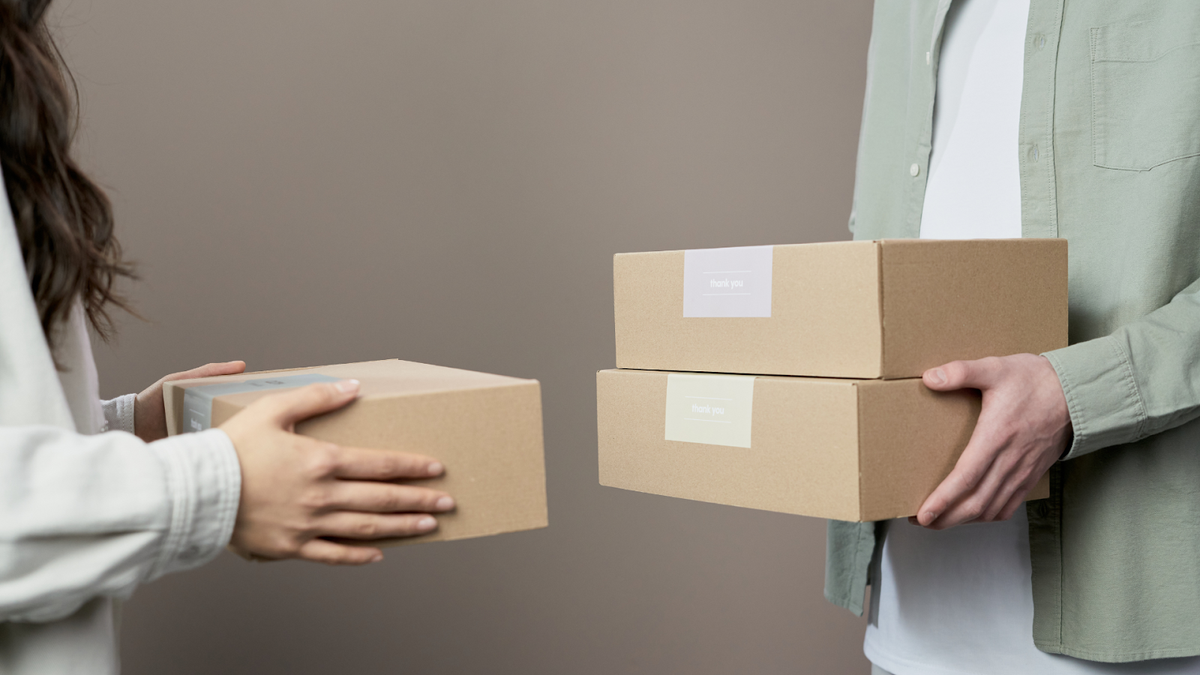
In e-commerce, sellers and buyers never meet face-to-face, so the packaging itself plays a key role in making a good impression. No matter how great your products are or how stylish your website looks, sloppy packaging creates a negative impression — making it hard for customers to recognize your brand's value and potentially hurting your store's reputation.
With this in mind, aim to use packaging that delights buyers when they receive their order and helps build brand recognition.
Plain envelopes and boxes are perfectly fine as a standard approach, but if you want to offer more brand originality, consider introducing custom packaging materials.
The main types of packaging materials that can be customized for e-commerce operations include:
- Cardboard boxes
- Envelopes
- Packing tape
- Cushioning materials
That said, many sellers may not have the budget to customize packaging right when they launch their store. In that case, including a handwritten thank-you note with the order can leave a lasting impression and build brand awareness. When opening a box and seeing a handwritten message first, the excitement level goes up and it creates a very positive impression.
Reassessing Your Logistics Approach
What did you think about the role of "logistics" in e-commerce? There are no hard-and-fast rules in either logistics or branding, so take this opportunity to review your current logistics processes and make sure they align with your company's brand identity.
※ This article was contributed by Beltran Co., Ltd.
Summary
At StoreHero, we frequently propose and implement CRM strategies using package inserts, and we appreciated this comprehensive look at shipping methods, order management systems, and packaging materials. Logistics is a deep and fascinating area from a growth perspective as well, and we hope this article serves as a starting point for improving your own logistics operations.