
Hero Interview: From Subcontractor Manufacturer to a D2C Brand Captivating the World — How ARAS Practices the "Management-Level" Fusion of Creativity and Data
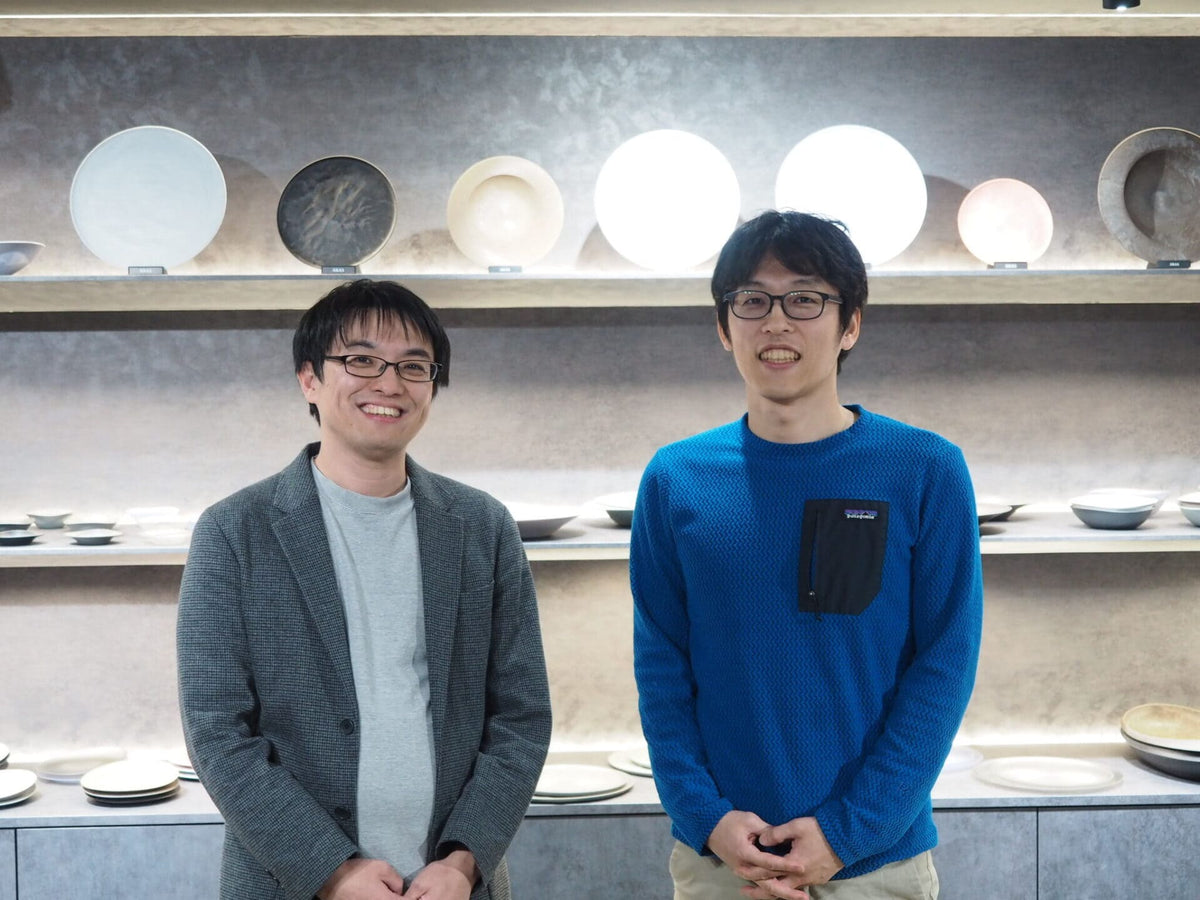
Our guest today is Mr. Tsutomu Ishikawa, Managing Director of Ishikawa Resin Industry Co., Ltd. The company's tableware brand "ARAS" stands out in the tableware market by combining overwhelming functionality — "won't break even if dropped 1,000 times" — with design that beautifully elevates the dining table.
How did this long-established OEM manufacturer launch its own brand and gain a loyal following? Behind the scenes lies a unique organizational philosophy that brings creators into the heart of management, advertising operations grounded in cutting-edge theory, and a deepened CRM approach that turned email newsletters into a primary sales channel.
We dive deep into the meticulous strategies driving ARAS's rapid growth and the ambitions behind its future global expansion.

Breaking Free from OEM and the Birth of High-Value Brand "ARAS"
Kurose: ARAS has become a fixture at luxury hotels like Hoshino Resorts as well as popular restaurants around town. Could you start by telling us about how this brand came to be?
Mr. Ishikawa: We launched ARAS in March 2020, but the concept itself had been taking shape for several years before that.
Originally, Ishikawa Resin Industry was a B2B company manufacturing a wide range of plastic products — essentially a subcontractor OEM maker. When I returned to the family business around 2016, I was working hard to restructure the company while driving B2B sales, but both my father — our president — and I strongly shared the desire to "someday have our own brand."
We actually had a predecessor brand called "Plakira" before ARAS. The products we developed together with "secca (Sekkwa)," the creative collective who are now also our design partner at ARAS, were of very high quality and gained popularity on Amazon. However, that's when we hit what I'd call a "business model ceiling."
Kurose: What exactly was that ceiling?
Mr. Ishikawa: An overwhelmingly low average order value. We were in the world of 800 to 1,000 yen per cup, so no matter how hard we tried, our average transaction topped out at 3,000 to 4,000 yen. Even if we were adopted by the prestigious Hoshino Resorts, for example, each property would only order a few hundred pieces — translating to sales of perhaps tens of thousands to a couple hundred thousand yen. I felt acutely that "there's no future for a brand on these numbers."
It also became clear that carrying the existing image of "Plakira" would make it impossible to realize the lofty ideals we had been discussing with secca — ideas like "expanding the dining experience" and "going one step beyond traditional craftsmanship."
So we made the decision to rebuild both the branding and the business model from scratch and compete as a high-value D2C brand — and that's how ARAS was born.
Kurose: So "high price point and high added value" was a non-negotiable condition from the very beginning.
Mr. Ishikawa: Exactly. At the time, the term D2C was just beginning to take hold in Japan, and I researched it thoroughly through the case studies of Fabric Tokyo and Tsuchiya Kaban, as well as books by Takram's Sasaki.
I kept asking myself how to combine the D2C success factors — distinctiveness that translates online, a story worth telling, and an average order value that makes business sense — with the emotionally resonant world that secca brings.
We revisited our materials development and committed to making "something truly exceptional" regardless of cost. I threw myself into the tableware market, fusing the Yamanaka lacquerware traditions of my roots with the latest resin technology, with no way back.

Success on Makuake and Transplanting the "Winning Formula" to Shopify
Kurose: You launched in 2020 and were immediately hit by the COVID-19 pandemic. How did the early days go?
Mr. Ishikawa: In February 2020, we held a pre-launch sale at an exhibition at Tokyo Dome and were just starting to feel the momentum — then COVID turned the world upside down. With the sense of crisis that "physical retail might no longer be viable," we found our lifeline in "Makuake."
This turned out to be a major turning point. Our first campaign attracted nearly 17 million yen in support purchases, a response that far exceeded our expectations.
Kurose: After that level of success, did sales on your own e-commerce site (Shopify) take off right away?
Mr. Ishikawa: No, not immediately (laughs). After running Makuake a second time, we ramped up our advertising efforts in earnest to carry that momentum over to our own e-commerce site.
The big game-changer here was transplanting the "creatives and structure we built on Makuake" directly to our own site.
A Makuake project page requires you to condense all information — the product's functionality, the story behind it, usage scenarios, the developer's vision — into one long, scrollable page. I realized that this "format" was the optimal way to communicate a product's value.
Rather than building a landing page from scratch, we took the battle-tested "winning formula" from Makuake and applied it to Shopify. This allowed us to launch our own e-commerce sales smoothly.

Looking at the "Numbers" Together with Creators: Management-Level Collaboration
Kurose: When it comes to ARAS's growth factors, the power of "creative" is undeniable. What kind of structure do you have in place to communicate both the "unbreakable" functionality and the emotional appeal of "stylish"?
Mr. Ishikawa: We view our creators not merely as vendors to commission work from, but as "management partners."
Typically, you'd hand over a detailed brief and say "please make this" — but we deliberately avoid that. Our stance is to hand them creative latitude: "The target is here, and these are the elements we want to convey. Beyond that, feel free to play with your instincts." We're committed to not constraining their talent.
Kurose: With that much creative freedom, doesn't it become harder to balance with business results?
Mr. Ishikawa: To bridge that gap, we have our creators participate in management meetings as well. We share all the raw numbers openly and without filter — "this video was beautiful, but the CVR on Meta ads was this low" or "conversely, why did this particular creative generate such a high ROAS?"
Kurose: It's rare to find a brand where creators are looking at the numbers right down to the dashboard metrics.
Mr. Ishikawa: True. But they're professionals — when you show them the numbers, they respond with "then let's try this next time" or "if this message isn't getting through, what if we expressed it this way instead?" They try to solve business challenges through the power of creativity.
It's not just about creating beautiful visuals — it's about pursuing together the kind of beauty that actually sells. I believe that the ability to use numbers as a common language for discussion is the source of ARAS's creative strength.

"Beyond Early Adopters": A Multi-Faceted Approach to Reaching a Wider Audience
Kurose: As the brand has grown, you're now entering a phase of expanding beyond the initial early adopter base to reach a broader audience. Are there changes you've been making in your advertising and customer acquisition?
Mr. Ishikawa: Exactly — as our target audience has expanded, relying solely on Meta ads is no longer enough. So we're now venturing into new platforms, including Pinterest ads. Since visual information is so important for ARAS, our hypothesis is that Pinterest, which attracts highly trend-conscious users, should be a good fit for us.
We're also focusing on enriching the content on our Shopify site itself and improving the UI/UX, to make sure we're fully communicating our appeal to a wider range of customers. Our early fans purchased instinctively, but for customers who are still considering, we need to carefully answer questions like "does this really fit into my lifestyle?" and "how is this different from other tableware?"
In the site redesign we carried out in December, we reorganized the navigation that had become complex as our product lineup grew, and revamped the structure so that even first-time visitors could explore without getting lost and gain a deep appreciation for what makes our products special. As a result, we're seeing an upward trend in CVR.

Overturning "Email Newsletters in This Day and Age?": Meaningful Dialogue Through CRM
Kurose: You've been putting significant effort into CRM, not just new customer acquisition.
Mr. Ishikawa: To be honest, up until a year ago I was skeptical — "Email newsletters in 2024? Nobody reads those anymore" (laughs). But after seriously diving into CRM with the StoreHero team, my perspective did a complete 180.
Kurose: What changed?
Mr. Ishikawa: We shifted from "sales pitches" to "delivering a thoughtful brand experience." For the over 150,000 customers who have purchased through Makuake or via ads, we now carefully deliver content that enriches their ARAS lifestyle — things like post-purchase care tips and seasonal table coordination ideas.
The response has been remarkable. Because these are customers who have already used our products and know firsthand how good they are, their enthusiasm for what we offer is high. Today, our email newsletters have become a powerful sales pillar on par with paid advertising.
I've come to understand that CRM isn't just a repeat-purchase tactic — it's a form of "dialogue" for conveying a brand's philosophy and deepening relationships with customers.
Cutting-Edge Shopify Usage and a "Serious" Challenge for Overseas Markets
Kurose: Finally, could you share your future vision and what you hope from StoreHero?
Mr. Ishikawa: The pace of change in the world is extraordinary, and the Shopify ecosystem and AI technology are evolving every day. We cannot cling to past successes — we must always be searching for new "winning paths."
From StoreHero, I'm hoping for access to the latest Shopify use cases and expertise. How do we use AI to hack increasingly complex customer journeys? How do we combine new apps to automate CRM? I want us to tackle together those kinds of cutting-edge, offensive moves on the technology front.
Kurose: What about overseas expansion?
Mr. Ishikawa: It's one of our top priorities. We're already looking at expansion into Hong Kong, Taiwan, the United States, and other markets, but I believe simply taking our Japanese products as-is won't be enough.
We're currently developing new products tailored to the food culture and needs of overseas markets. Building on the winning model we've established in Japan, we're also upgrading the products themselves as we aim seriously to become a global brand.
The new products scheduled to launch next year are truly our most confident work yet — designed with the world in mind. As Ishikawa Resin Industry and as ARAS, we'll continue our challenge to update the "dining experience" around the world, with the pride of Japanese craftsmanship in our hearts.
Kurose: StoreHero will continue to work alongside ARAS as it grows even further. Thank you so much for your time today.
