
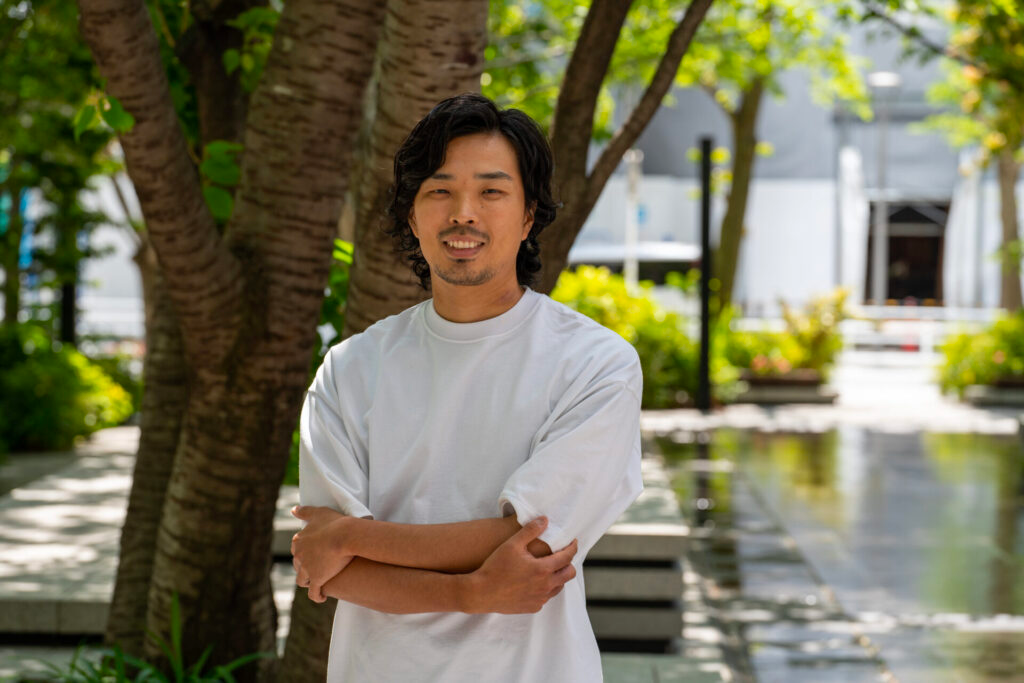
Hero Interview with AuB Inc.: "We build trust steadily by being thoroughly open and sincere. And we apply the teamwork cultivated in professional sports to our organization and product development."
AuB is a life science company founded by Keita Suzuki, a former member of the Japanese national soccer team. Operating under the mission "Bring everyone to their best condition," the company has continued its research and development of gut microbiota from athletes, holding one of the world's top collections of athlete gut microbiota data. Based on its research findings, AuB develops products and services that scientifically pursue functionality and quality, supporting the health and well-being of people everywhere. In this interview, we spoke with Mr. Tanaka, Director and Head of Business Operations, about e-commerce management, business building, and organizational development. One particularly distinctive aspect of our conversation was how CEO Mr. Suzuki leverages his experience in professional sports to shape the company's organizational culture.

— What led you to adopt Shopify for building your e-commerce site?
After founding the company in 2015, we spent the early years focused exclusively on gut microbiota research. After about four years, research results began to take shape, and we reached a phase where we could start developing our own products based on those findings — so we decided to build a business around them.
Specifically, we started by creating products in the health food space. We could make the products, but we had no experience in areas like selecting sales partners, customer service, or logistics. So we initially outsourced those operations to another cart system provider. However, there were differences in direction, so we decided to switch to a different cart and compared various services. That's when we discovered Shopify. Looking ahead five or ten years, Shopify seemed like an incredibly attractive platform, and we felt it was important to build our business strategy around it. So in 2020, we migrated to Shopify.
From there, we worked through trial and error to bring the previously outsourced functions in-house. Once we could operate things ourselves, we wanted to push further — and we thought moving to the next stage would be easier with knowledgeable partners by our side. Around that time, I had been following Kurose-san (CEO of StoreHero) on Twitter, where he often shared insights about Shopify. I wanted to work with someone who was genuinely passionate about it, so I reached out. I had already come across Kurose-san through Twitter, and I even bought and read his book on Shopify operations. I really wanted to connect with him, so I reached out through a mutual contact.
— At that time, did you speak with any other companies besides StoreHero?
We were already at a point where we had grown to some extent on our own, so we only spoke with StoreHero.
StoreHero's approach to growth support isn't about acquiring customers first — it's about carefully building customer relationships while growing the business. That philosophy resonated strongly with us, which is why we decided to work together.
We'd had experiences with other growth support companies — not just Shopify-focused ones — so I could tell right away from our initial conversation that StoreHero had a different character.
We place a very high value on the customer experience, and StoreHero understood that immediately. From the very start, they were thinking alongside us — that left a strong impression.
— Since your products are in the healthcare space, there are likely many things you can't say due to pharmaceutical regulations. Within those constraints, what approaches have you taken to communicate the value and proper use of your products?
When it comes to pharmaceutical regulations, we have that expertise in-house. What StoreHero has been helping us with, on an ongoing basis, is figuring out how to maintain continuous communication with customers in a way that raises engagement and ultimately improves LTV (Lifetime Value — the total revenue a customer generates over their relationship with a business).
That includes LINE messaging and email newsletters, but one thing we were especially grateful for was being introduced to diagnostic tools as an entry point for new customers.
— As your revenue has grown, what has changed — and what has stayed the same — in your growth initiatives?
We rebranded in March of this year, so things like the package inserts that serve as touchpoints with customers have changed quite a bit. And as our customer base grows, we're also noticing a gradual increase in feedback and questions coming in through LINE and email newsletters.
On the other hand, what hasn't changed is our confidence in the products themselves. That said, if customers are just taking supplements mechanically for health management without any engagement, they tend to lose interest and stop. Making it enjoyable and sustainable — expressing that through CRM and social media — remains a priority for us. From the very beginning, StoreHero advised us to build operations in a way that could scale as revenue grows. That guidance has proven invaluable.
— You mentioned that customer responses have been increasing. Has that led to any changes in your team structure?
In terms of organizational changes, we've started running a proper customer support team. Previously, we relied on an external call center, but now we have a dedicated team handling direct emails and chat inquiries from customers. We've also started incorporating the content of those inquiries into our email newsletters and LINE messages — so customer voices are becoming content that reaches new customers. That cycle is starting to take shape.
— So customer feedback is being actively reflected not just in operations, but also in product development!
Beyond the products themselves, it's becoming much easier to iterate and improve on the overall customer experience.
— Since you deal in health-related products, customer trust is essential. What do you prioritize — and what specific initiatives do you take — to balance short-term revenue with long-term growth?
Whether we're talking short-term or long-term, I believe that the foundation of protecting our brand is, ultimately, the trust of our customers.
For example, we only share information we ourselves trust. This is something we are absolutely consistent about — in advertising, on LINE, in newsletters, across the board. We hold ourselves accountable for the reliability of every piece of information we put out.
We don't rush to scale the company. Instead, we take a measured approach — pressing the accelerator only when we're truly ready. Rather than pushing hard before things are in order, we believe in holding back until we're confident we can do so responsibly.

— Are there moments when you feel that you're truly growing?
I don't think there's one single clear indicator — it's more of a combination of things. We still see ourselves as being in the foundation-building stage, but what has really changed is that the basics are now being executed consistently and reliably.
Our customer numbers are steadily growing, and the data reflects that change. And even when there are areas where the numbers aren't great, we're in a position where we can investigate the cause and take action. The foundation for growth has been solidly built, and I feel that clearly.
— Looking ahead, what do you think will be most important for continued growth?
To keep growing, we first need to steadily expand our product lineup — that's a necessity for us. But equally important is having the operational structure to support the content that goes with those products. StoreHero has advised us on this as well, and I've come to truly believe that building a team capable of producing content is absolutely critical.
Most of our customers consume our products as supplements, but we also place importance on whether we can provide information and content in a variety of formats that are suited to different customers. Our content team is starting to come together as well.
— You mentioned expanding your product lineup — are you planning to go beyond supplements and protein, into a wider range of products?
Yes, we'll be expanding into the food category, and we're also thinking about developing products tailored to different age groups. Our current core customer base is primarily in their 30s and 40s, but characteristics and tendencies vary across age groups — and even between individuals within the same age group. So we're conducting research to develop products that can meet the needs of each demographic. Our mission is "Bring everyone to their best condition," so we want to grow in a way that allows us to deliver the right products to a wide range of people.
— So going forward, will you be expanding both into younger and older age groups beyond your current core demographic?
Yes. People in older age groups tend to be more conscientious about their health, while among those in their 30s, some are already paying attention while others aren't yet. But even if someone isn't concerned about their own health, their family members often are — so there's definitely an opportunity to expand across generations. Rather than being seen simply as a D2C company, I see us as a research and development company with scientific findings that can be applied across all age groups — a company with the capability to reach a broad spectrum of people.
Rather than serving just one individual, we're moving toward serving an entire family — so figuring out how to design the customer experience around that will become an increasingly important challenge. And I truly hope we can tackle that next stage of growth together with StoreHero.
— On the topic of talent development — I've noticed that your team members often speak passionately about the importance of gut health and digestion. What do you do to help instill the brand's philosophy throughout your team?
Our internal structure is broadly divided into three teams: research, marketing, and general/legal affairs.
The research team regularly holds study sessions, and the marketing team compiles and shares information that's relevant internally. When each team shares updates, internal discussions naturally arise. We may have organically created an environment where people are constantly exposed to this information.
Since we have our own products, people share their personal experiences — what it felt like when they tried something, what happened when they used a product. Another distinctive aspect of our company is that, because we prioritize health management, we've incorporated it as a metric in our performance evaluations. So trying things out and sharing experiences with each other has become fairly normal here.
— Do many people who join your company already have a high health consciousness?
Rather than people arriving with a high health consciousness, I'd say it's more common for that consciousness to develop naturally after they join.
— So it's not a prerequisite. What kinds of motivations tend to drive people to apply?
The combination of a company founded by a former professional athlete and working with something as novel as gut microbiota does have a certain appeal — so we attract a variety of different types. That said, quite a few candidates seem to have a personal or family-related concern around health.
During the interview process, almost everyone meets with the whole team. We place a lot of importance on being fully open during those conversations — not putting on a facade — and candidates often pick up on the sense of trust between team members. Many people have told us that was a key reason they wanted to join.
Once they're on board, I think the environment naturally cultivates a love for our products through their hands-on involvement with them. All of our employees take pride in developing products with confidence and refining the customer experience.
Something we often say internally is that we're making products we'd genuinely recommend to our own families. In fact, quite a few team members buy our products for their parents, grandparents, or children.
— Is there anything you consciously do to create an environment where brand love can grow?
I've been told that being able to naturally and confidently say "our products are amazing" is a truly wonderful thing.
As I mentioned earlier, not doing or saying anything we're not certain about is something we've thoroughly embedded into our culture. And I do feel that all team members are deeply aligned with the direction we're heading.
Another thing I find remarkable about our CEO, Suzuki, is that while he may not have a business background, he has spent his entire career in a world defined by what it means to be a team. As a former member of Japan's national team, he has experienced what it takes to build the strongest team in the country. His deep understanding of team cohesion — and his focus on that — is something quite distinctive about our organization.
— So you're taking the lessons learned in professional sports and applying them to how you build your organization.
Yes, I think we're genuinely translating sports into organizational structure.
— What do you keep in mind when building your team structure?
We place a strong emphasis on team members trusting each other while working together. To make that happen, we have two non-negotiables: all internal information is fully open, and communication always happens in the open — never in side conversations or closed channels.
I believe that keeping communication dense within the team is also what allows us to continuously improve the customer experience. There are no siloed hierarchies here — seniority and tenure don't determine status. It's a genuinely flat environment.
— From a talent development perspective, are there other things you personally keep in mind, Tanaka-san?
I absolutely want people to pursue what they genuinely want to do. It's not about micromanagement, but I do ask a lot when it comes to whether someone is truly thinking for themselves and whether their ideas are being shared with the team in a visible way — for example, whether they're capturing things on a whiteboard. I'm very conscious about making sure we never end up in a state where no one knows what other team members are working on or thinking about.
— Going forward, do you see yourselves growing by increasing headcount, or would you prefer to stay lean and build a small but highly capable organization?
I'd like to grow the headcount while maintaining that foundation of mutual trust and openness. There is still so much we need to do, and we simply don't have enough people to do it all — nor do we feel we've fully communicated our mission to the world yet. So we're actively looking for people who want to be part of this journey.
Every member of the team genuinely wants to reach more people with what we do — and more than that, we all want to help bring our CEO's vision to life. We are sincerely committed to understanding what he's trying to achieve and making it real.
The challenge is that reaching more people takes time, and the fact that we haven't been able to grow explosively yet is something we wrestle with — but I still believe we're in a phase where we need to keep building solid foundations.

— Finally, could you tell us what you've found most valuable about working with StoreHero on your growth initiatives?
The people at StoreHero are fundamentally principled thinkers, and I find that truly wonderful. They don't retreat to quick tactical fixes — they understand our values and think through things with us at a deeper level. In that way, I see a lot of similarities with how we approach things at AuB, and that alignment is what makes working with them feel so natural. Because they're principled thinkers, the kind of growth they talk about feels like real growth — and that gives me confidence in them. I genuinely feel that we have found an excellent partner.
— Thank you so much for sharing such valuable insights! We will continue to support AuB in bringing your products into the daily lives of more and more customers.