
Hero Interview: Building a Brand Together with Customers — Onepeace's Community-First Approach to Fan Building
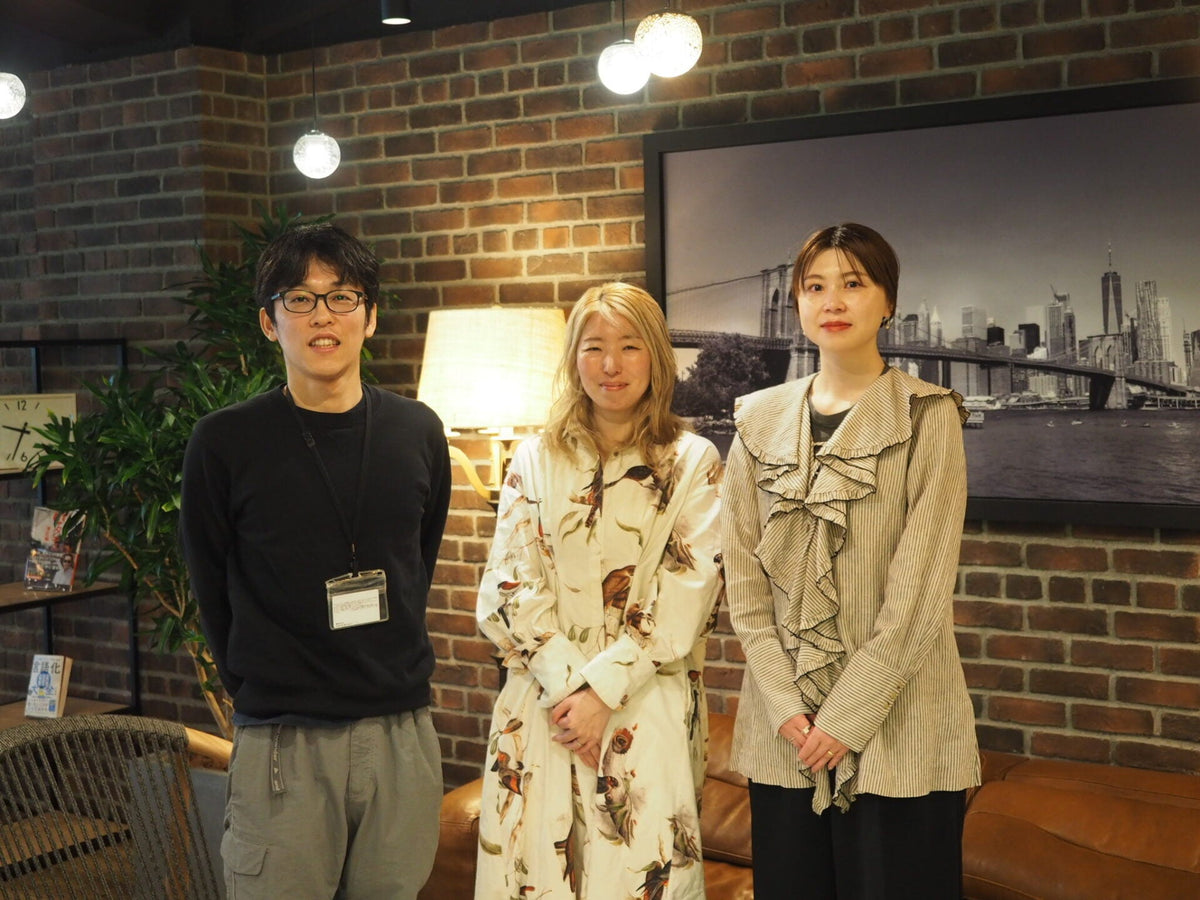
Today, we sit down with Mr. Tabuchi, who oversees the Content Business Division at Onepeace Co., Ltd., and Ms. Mizutani, who leads the UI/UX team within the same division. The company operates five ladies' apparel brands targeting women in their 40s to 60s. While marketplace platforms like Rakuten and ZOZOTOWN serve as their main sales channels, they have clearly positioned their Shopify direct-to-consumer store as a place to "nurture fans," driving unique growth centered on community and content.
The Content Business Division, newly established last year as the company expanded, is composed of three teams: Marketing, Real Content, and UI/UX. Acting as a liaison between individual brands, the division handles everything from planning and executing promotional campaigns to directing sales improvement initiatives. We spoke with them about their growth strategy — building fan enthusiasm through community and dialogue to steadily accumulate sales — and about their work with StoreHero.

Marketplaces for "Products," Shopify for "Content"
Kurose: First, could you tell us about your business?
Mizutani: We operate five brands centered on ladies' apparel. Our flagship brand, CAWAII, features distinctive and glamorous clothing you'd want to wear on special occasions — trips or outings with friends. On the other hand, Ehre style offers clothing that working mothers in their 40s can wear to both business meetings and school events. Each brand has its own personality. What they all share is a focus on figure-flattering designs that stand out from the crowd. Our target customer is women in their 40s to 60s.
Kurose: You're active on marketplaces like Rakuten while also investing actively in your own e-commerce. How do you position each channel?
Tabuchi: Marketplaces like Rakuten, Yahoo!, and ZOZOTOWN are product-driven worlds. Customers discover products through rankings or search, compare them, and buy. Our Shopify direct store, on the other hand, is positioned as a content-driven world. Customers discover products through features and editorial pieces and develop an affinity for the brand's vision. We operate it with a clear intention: to make it a place that nurtures repeat customers and fans.
Kurose: How is your team structure organized?
Tabuchi: Our team directs company-wide promotions — CRM, advertising, mixed-brand coordinate content, and more — while each individual brand independently handles product registration and its own content creation. I believe this balance of "cross-brand coordination and brand independence" is the key to achieving both fast content production and overall cohesion.

A Major Redesign Born from "Can't Find It"
Kurose: What prompted you to redesign the Shopify site?
Mizutani: About a year and a half ago, we were receiving a lot of feedback from customers saying they couldn't find what they were looking for. For example, when someone searched for skirts, the inner tops styled with those skirts would also appear in the results. We initially planned minor fixes, but there were so many requests that we decided to rebuild from the ground up.
Kurose: What was the key focus of the redesign?
Tabuchi: "Easy to buy, easy to understand." We kept this as our constant guiding principle. Many of our customers are not accustomed to online shopping, so rather than relying on our team's own intuitions, we kept asking from the customer's perspective: "Will they actually understand this?"
Another major challenge was balancing the individuality of five brands with a unified look across the entire site. Previously, each brand built pages independently, which meant brands with coding capabilities had far more expressive power than those without. Image sizes were inconsistent, category structures were not unified, and customers who tried to shop across brands would get confused — "where was that page?" — and drop off.
Mizutani: In the redesign, we unified the visual appearance at the top of each page across all brands, while allowing each brand to freely customize the layout and images in the lower sections to express its own personality. We gathered requirements from all brands upfront and prepared common components — such as embedded Instagram feeds and live stream content — with the flexibility to show or hide them as needed. The result is a system that preserves overall cohesion while letting each brand express its own world.

Content Acquires Customers More Efficiently Than Advertising
Kurose: Could you tell us more about how you plan and produce content?
Mizutani: Each brand has a dedicated content creator with full creative authority. Rather than being confined to standard product pages, our stance is that each brand can freely express its personality — so floor staff enjoy the process and produce a wide variety of content quickly. The basic flow is: collect customer pain points and wishes through surveys, then create content that addresses them.
Kurose: How has content contributed to sales?
Tabuchi: Honestly, we used to struggle with content that didn't directly translate into sales. That changed when, at StoreHero's suggestion, we started landing Meta ads directly onto content pages rather than product pages. The cost per acquisition (CPA) through content was about 40% lower compared to running ads directly for products. Because the content speaks to customers' real concerns, it resonates naturally — even as advertising.
Email newsletters also generate a very strong response. Between brand-specific segmented sends and cross-brand broadcasts from our central team, there are days we send multiple emails, and our delivery schedule becomes quite packed. Since there's always fresh information every time customers visit, our repeat purchase rate has risen significantly.

Relatable Staff Who Create "Fans"
Kurose: What do you consciously do to generate enthusiasm among your customers?
Tabuchi: We're intentional about putting our staff front and center. Since moving to Shopify, our staff have been appearing in content such as "snap" features just as they are in real life. Because they're not models — they're staff members of the same generation and body type who share the same styling challenges — customers feel: "If she can wear this coordinate, maybe it'll work for me too." In fact, staff are beginning to develop their own fans, and we're hearing more and more comments like "I want to buy it because she's wearing it."

A "Co-Creation" Community Born from a Sense of Urgency
Kurose: You're also actively working on building a community, aren't you?
Tabuchi: Actually, about ten years ago, our president valued opportunities to meet customers face-to-face through events like "tea parties." But that faded away — partly due to COVID — and before we knew it, we had become a brand people could easily buy from anywhere and just as easily switch away from. That strong sense of urgency led us, about a year and a half ago, to commit to "going back to our roots" and once again make fan building and real-world connections a company-wide priority.
We engage directly with customers in social media comment sections and hold real-world events such as our 20th anniversary party. What makes us especially happy is when actual products are born from customer feedback. Items like our "lace skirt" — developed based on community input — always generate a big response. Customers are delighted that their opinions took shape, and naturally they feel a stronger attachment to those products.
Kurose: That is truly "co-creation" with your customers.
Tabuchi: Exactly. Each of these initiatives generates enthusiasm, enthusiasm grows the fan base, and fans build up sales. This cycle is the greatest value of a direct e-commerce store — something marketplaces simply cannot replicate.
"I Was Moved to the Point of Trembling" — Our Encounter with StoreHero
Kurose: What has stood out most to you about working with StoreHero?
Tabuchi: When we were searching for a partner, our company had set an ambitious target: triple sales in three years. StoreHero responded to that goal with a specific, data-driven, and passionate proposal. Honestly, I was moved to the point of trembling. I immediately felt strongly: "I want to work with these people."
Kurose: What specific results have you achieved?
Mizutani: During the redesign, they organized and managed a huge volume of requirements so that everything could land realistically within budget. On the operations side, we achieved the overall optimization of CRM, advertising, and content — which had previously been siloed. Even when sales didn't grow as expected during the peak season for suits, initiatives proposed by StoreHero that leveraged content produced results far exceeding the previous year.
What we appreciate most is that they make visible the issues we can't see ourselves — and they don't just give advice; they carry things through almost to the point of launch. That means our brand teams act quickly because they can see it will drive sales. As a result of this virtuous cycle, we've achieved growth that far exceeded what had felt like a very challenging target. Energy levels on the ground have risen too — the team is genuinely excited.
Kurose: How do you find working and communicating with StoreHero?
Mizutani: There is naturally a gap in e-commerce and marketing knowledge between us and StoreHero. But rather than assuming we already understand, they always explain things in a clear and accessible way. Because we understand what we're doing before moving forward with a campaign, the quality keeps improving. Going forward, I'd love for StoreHero to continue sharing their knowledge of strategies in that same approachable way.
The Challenges Ahead — Accelerating the Fan Economy
Kurose: What are your plans going forward?
Tabuchi: Now that the redesign is complete, internal discussions have fully shifted from UI/UX issues to what we do next. Having finished the UX work, our focus has sharpened and we can now have more offensive conversations. This is where the real battle begins.
First, a full push into YouTube. Women in this demographic use YouTube more than other social media platforms, and it's a territory we haven't touched yet — so there's enormous room to grow. Next, introducing a tiered loyalty program to accelerate fan building. The idea is a system where benefits increase with each purchase, creating a clear point of differentiation from marketplaces and growing a fan base that keeps coming back. We'll also further strengthen our influencer initiatives using Shopify Collabs and our efforts to build personal fan followings for individual staff members.
Kurose: Onepeace is accelerating a fan economy anchored in community — and StoreHero is proud to walk alongside you on that journey. Thank you so much for your time today.