
Hero Interview: Tsuchiya Kaban Seisakusho Co., Ltd. — "From Upstream to Downstream: Growth Strategies Unique to a Manufacturing Retailer — The Challenge of Leather Bag Brand Tsuchiya Kaban Seisakusho"
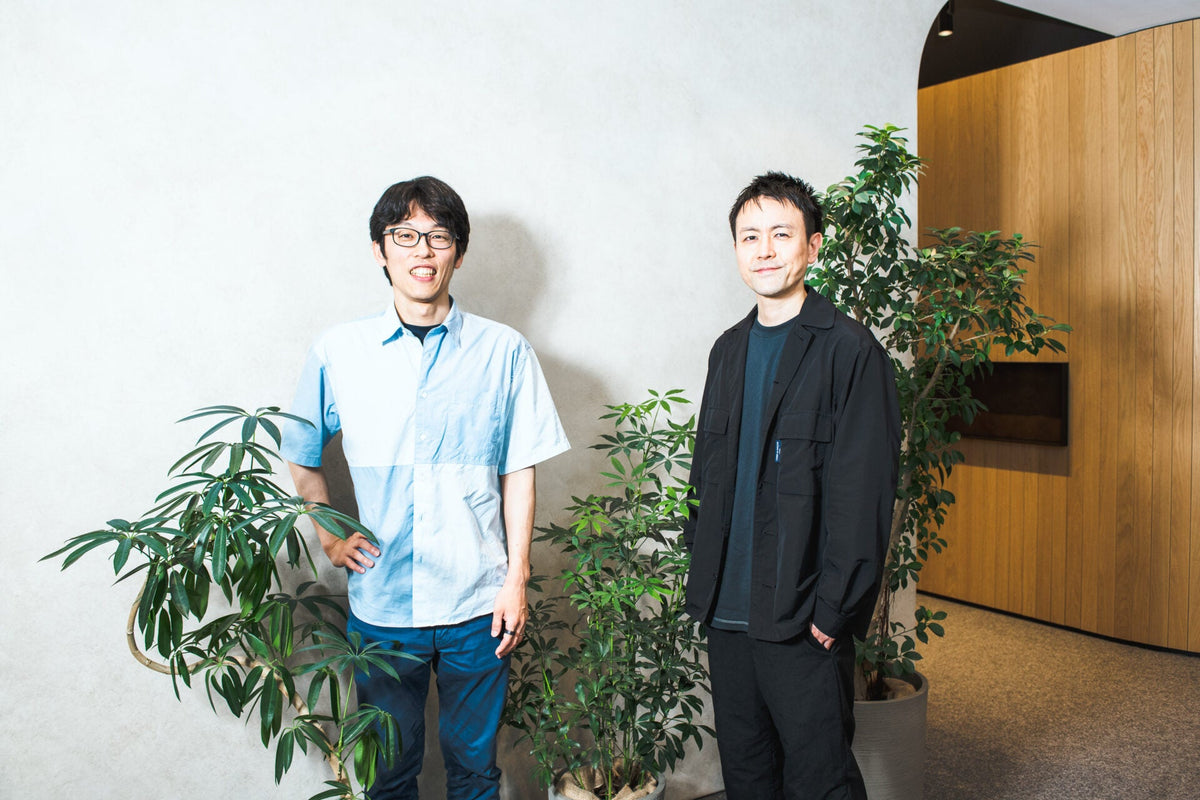
Since March 2022, StoreHero has been supporting the growth of multiple brands operated, supported, and invested in by the Harisleague Group, including Tsuchiya Kaban Seisakusho. How do they pursue growth while deploying brands at different stages across multiple channels including physical stores? And how has that changed the organization? We spoke with Yujiro Numata and Tatsuya Nakahashi, who oversee the Tsuchiya Kaban Seisakusho and objcts.io brands, in a conversation led by Kurose, who handles growth support for the group.
Kurose: I believe I first met Mr. Numata over ten years ago. It started when he was at Tsuchiya Kaban Seisakusho — before objcts.io — and spoke at an event I organized at my previous company. Even before we founded StoreHero, Mr. Numata was already leveraging Shopify, and he even advised me when I started the company.
Now we have the privilege of working with you as StoreHero. Since March 2022, we have been supporting growth for Tsuchiya Kaban's international sales, for objcts.io which Mr. Numata launched, and since September of that year, for multiple brands including randoseru (school bags) and jewelry. Thank you for joining us today. Could you start with a brief introduction of your backgrounds and current roles?
Numata: After working in e-commerce at Tsuchiya Kaban, I spun out to launch objcts.io, which develops mainly backpacks and smartphone shoulder bags, but last January I returned to Tsuchiya Kaban with the brand.
Currently, I oversee the entire objcts.io business as well as e-commerce overall for multiple brands including Tsuchiya Kaban.
Nakahashi: I serve as the business head for both Tsuchiya Kaban and objcts.io. Internally, we have function-based organizations — product development, store operations, customer support — and our team acts as a cross-functional connector, coordinating across those marketing domains.

Can You Simultaneously Maintain Brand Identity and Drive Growth?
Kurose: I'd like to jump straight into the topic of growth. Growth support ultimately means increasing revenue. At the same time, brands are expected to preserve their world-view and identity. I think there is inherent tension between the two. I still wrestle with how aggressively to push, even as I make proposals. Do you have any tips for maintaining brand identity while growing revenue — can they truly coexist?
Numata: That's quite a difficult question to start with... Brands vary enormously. Some are heavily weighted toward functional benefits, while others are primarily driven by emotional value rather than function.
When it comes to emotional value, it is difficult to define clear criteria for what is good or bad — human judgment based on emotion is unavoidable. Therefore, I think it is sometimes faster to have key decision-makers participate in various projects and make calls on the spot.
Kurose: Growth has a certain established playbook, and we adapt it to each client's business when making proposals — but whether to adopt and actually execute it depends entirely on the client's judgment and ability to act.
Numata: We are a manufacturing retailer with a long value chain, so after deciding to try something new, we sometimes discover during the manufacturing process that it is not feasible. For example, a relatively small brand like objcts.io operates where decisions made in team meetings are effectively company-wide decisions, and anything agreed upon can be executed as long as resources allow. But at a larger-scale brand, that is simply not the case. It may sound old-fashioned, but I believe it is essential to have the key stakeholders in the value chain and the business owners participate in discussions and make decisions on the spot before moving forward.
Kurose: Even at the execution stage of growth initiatives, does scale make a difference?
Nakahashi: The importance of keeping goals simple is consistent regardless of brand size, but I think larger brands feel that even more strongly. Larger brands have experienced more failures, so their checklists have grown, and there is a tendency to prioritize thoroughness. From a growth and resource perspective, some of those checklist items might be worth questioning — but deciding whether to eliminate them requires starting from the customer's point of view, which means deliberations take time.
Numata: For an established brand, seasonal campaigns and year-round projects are already set in motion, with many ongoing projects running simultaneously. Trying to take on new growth initiatives with whatever capacity remains is difficult, because major course corrections also lead to fatigue — striking the right balance of effort is genuinely challenging.

How to Achieve Both Brand Experience and Growth in an OMO Environment
Kurose: Your brands create a brand experience that spans multiple online and offline channels. What is the key to achieving cross-channel growth?
Numata: Our revenue mix is truly hybrid — both online and offline matter. When it comes to creating a seamless brand experience across channels, I think the keys are having a strong on-the-ground perspective in both online and offline channels and genuinely understanding who the customers are. Nakahashi has experience launching both physical stores and e-commerce, so he is the true hybrid.
Nakahashi: For example, the idea of launching an EC-exclusive product to boost online sales comes from a brand perspective, not a customer perspective. I think it is important to start by imagining what a great experience looks like for customers at each channel. From there, you can reason: this is how people use Instagram; this is the mindset people bring to Google Search; therefore, this type of recommendation makes sense.
Numata: When you shop as an everyday consumer, you sometimes think, "This is a great experience." Perhaps having many people with high sensibility who shop frequently is what shortens the path to delivering great experiences.
Kurose: You are using Shopify POS. Is data integration between online and offline becoming more convenient?
Numata: It's almost beyond "integration" at this point — the data is seamlessly the same. Combining online and offline purchase behavior data should surface all kinds of interesting insights, but we have not fully gotten there yet internally. I'd love to ask StoreHero to help with that starting from our next regular meeting. (laughs)

Keeping Information Open and Cross-Functional to Achieve Shared Goals
Kurose: When the goal is growth — i.e., increased revenue — you often see situations where one channel assists and another channel captures the sale. This makes it harder to evaluate individual contributors, and it can also affect motivation.
Nakahashi: Challenges remain, but we are seeing improvement. First, it is critical to help team members understand why connecting with other people and other channels matters. When we clearly explain the role each member's channel played within the overall project, cross-functional collaboration tends to increase naturally.
Recently, some members have started feeling that they cannot perform at their best unless they understand what other teams are doing. Flipping that around, you could say they have come to genuinely believe that connecting with other teams is essential.
Because our brands have a long value chain, simply putting systems in place is not enough. Growth really only starts moving once each team member genuinely believes that working in sync with others toward a single goal is what matters.
Part of that requires keeping information open rather than siloed, but there are psychological barriers — some people feel embarrassed to have their exchanges seen by other team members. We work on this every day to gradually improve.
Numata: Because workshop and store staff are also involved, I thought a familiar UI like Messenger would work better, so we adopted Meta's Workplace tool. We have not fully maximized it yet, but we are aiming for a state where communication happens as much as possible in open channels rather than closed chats, so anyone can access the information they need. Individuals can control their notification frequency themselves, which helps.
Nakahashi: For evaluating members who play an assist role, we set the division's overall revenue as the ultimate goal, and then define targets that include qualitative elements. Members no longer try to grow only their own channel's numbers, and we no longer evaluate anyone based solely on that.
Working Backward from Goals Changes How People Work
Kurose: Has having StoreHero involved in growth support led to positive changes?
Nakahashi: Previously, when deciding which initiatives to prioritize, we looked at the data but tended to lean too heavily toward "the experiences we want to deliver to existing customers as a brand." By working alongside StoreHero, we have been able to quantitatively grasp our situation and then factor in qualitative considerations when deciding what to do.
You can collect data endlessly if you try, and checking everything is simply not possible. Receiving advice from StoreHero, who knows what to focus on, and being able to look at data through the lens of "growing this number will lead to more revenue" has been an energizing change.
Numata: It is not that we lacked a growth mindset before — team members in the field were each working hard according to their own roles. Having StoreHero involved has enabled us to work even more deliberately by working backward from target numbers. We have also become able to bring members together from various teams at once and have real discussions about how everyone can reach the shared final goal together.
The way people work and think has changed, and it has become easier to step outside one's own domain and collaborate with other departments and team members for the sake of growth. Of course, we still have a long way to go as a company.
Kurose: It is significant that people have come to believe it is important to understand others' roles and actions, not just chase their own area's results, and to work backward from data toward the overall final goal of increased revenue.
Numata: We have many young members, including new graduates, and there is a culture of wanting to do things ourselves rather than outsourcing. We were looking for a partner who could run alongside us, including for development and training. Overseas, there are many types of hands-on agencies, and it is standard practice for brands to work together with growth professionals. I think the arrival of Shopify, which democratized sophisticated e-commerce, has made subsequent steps like growth and branding even more important.

Toward Growth That Reflects the Brand's Own Vision
Kurose: Please share your future vision and any requests you have for StoreHero based on that.
Nakahashi: For many years, we have operated on the principle of planning ourselves and doing the work ourselves. On that basis, we sometimes received conceptual advice from outside, but it rarely translated into concrete action. Having StoreHero involved has dramatically expanded the range of options available to us. Going forward, I hope that by experiencing the process behind each proposal — understanding "why this recommendation was made" — we can build that knowledge internally, leading to higher-level discussions in our regular meetings.
Numata: Mr. Kurose, you once mentioned that when you push growth to its limits, it goes beyond individual areas like advertising operations and traces back through the entire value chain to more upstream processes. I think having StoreHero involved further upstream could be valuable, but I also believe that if we share more information from our side, our growth efforts themselves will improve. One approach I would like to explore: while the counterpart remains the business owners, I would also like to have the younger hands-on members in the field take on more of an assistant role alongside StoreHero.
Kurose: We do already have separate conversations with those assistant-role members outside of the regular meetings — it gives us a chance to hear about small pain points that are hard to raise in a meeting with dozens of participants, which in turn makes it easier for us to help. I do not believe all of our proposals have been right, and I want to keep improving. If you share with us "this is what makes us unique" or "as a brand, we want to feature this product right now," we can further customize our proposals. Critical feedback and pushback are always welcome.