
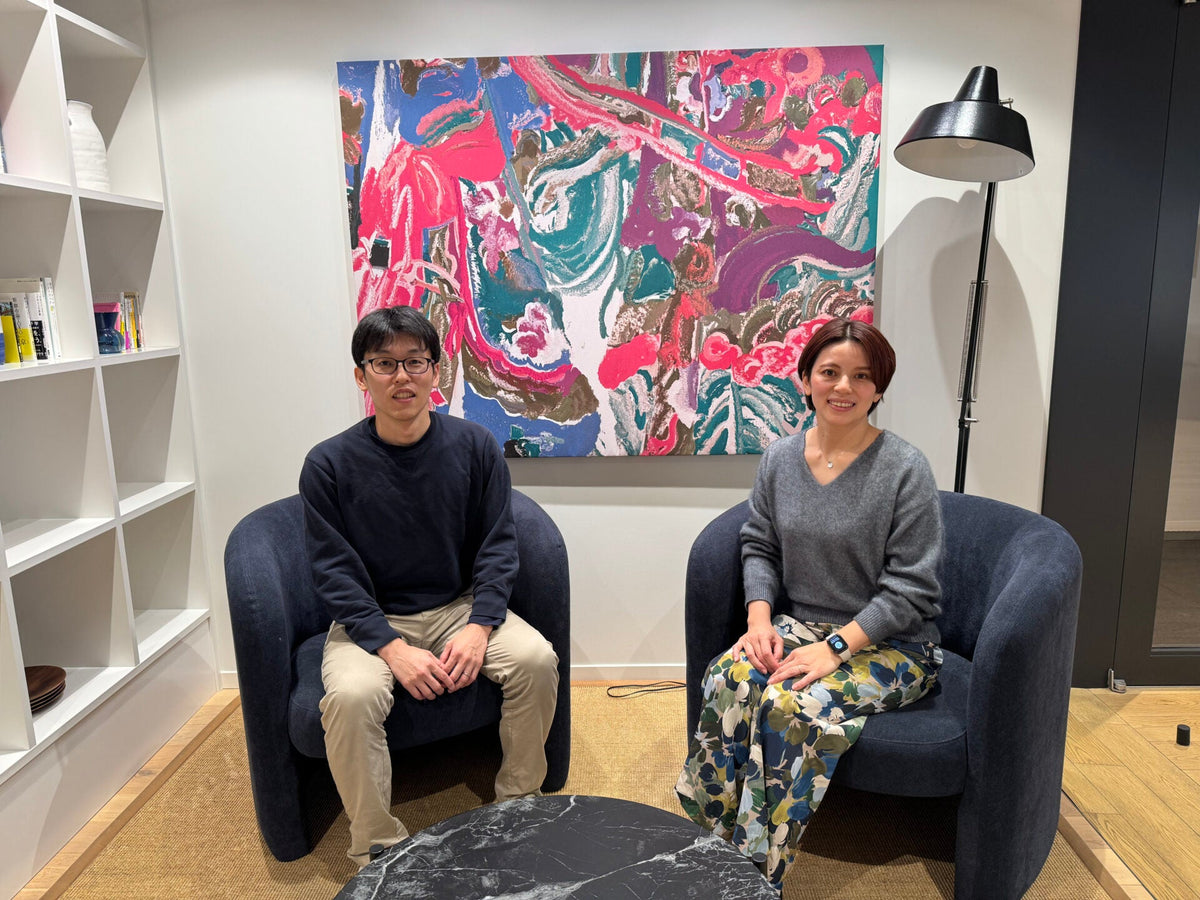
Hero Interview: Weskiii Co., Ltd. — "Bringing 'I Wish We Had This' Products from Abroad to Japan: An EC Strategy for Growing Multiple Brands Through Community, Centered on Baby Goods Brand b.box"
Since 2020, StoreHero has been supporting the growth of multiple brands handled by Weskiii Co., Ltd., including b.box. Yuka Sumida, Creative Director and Board Member of Weskiii Co., Ltd., has been bringing products from overseas that she wishes existed in Japan and growing brands by building communities around them. Our growth consultant Kurose sat down with her to discuss why the company doubled down on e-commerce during the COVID-19 pandemic, the challenges and benefits of adopting Shopify, the secrets behind building a passionate community through Instagram Live and ambassador programs, initiatives across multiple brands including b.box, and their vision for the future.
Bringing "I Wish We Had This" Products from Abroad to Japanese Moms — The Driving Force Behind b.box Japan and the Philosophy That "A Happy Mom Means a Happy Family"
Kurose: Can you tell us how you came to launch the b.box brand in Japan?
Sumida: An acquaintance who works as a distributor introduced me to b.box. At the time, b.box's best-selling baby straw cup, the "Sippy Cup," wasn't available in Japan. The moment I saw the product in person, I was convinced it would absolutely resonate with Japanese customers, and I decided to take the challenge despite having many competitors. We started selling after a lot of trial and error.
Kurose: What was behind the decision to focus more seriously on e-commerce?
Sumida: The closure of physical stores due to COVID-19 had a major impact. We had originally been trying to balance wholesale and e-commerce, but circumstances made it urgent to shift focus to e-commerce. We started with a small team, but by collaborating with marketing staff and designers and leveraging tools like Instagram Live, we were able to strengthen direct communication with our customers.
Kurose: Could you tell us about your own role?
Sumida: I serve as a bridge connecting b.box with end users. I search overseas for items I think, "I wish something this convenient existed in Japan," and then actually bring them to the Japanese market. I see myself not just as a brand representative, but as a voice for moms.
When you're raising children, it can be hard to go out or join communities, and you can easily feel isolated. That's why I thought, "Wouldn't it be more fun if we could connect online?" and started doing Instagram Lives. The whole thing began with the desire to build a community.
Our company has a philosophy of "delivering happiness." We aim to bring comfort and joy to people through products — to put smiles on their faces. Moms tend to prioritize patience and frugality, but if a mom can use something convenient and feel happier herself, that happiness extends to the whole family. What's good for mom is good for the whole family. And for children, when everyday tasks like eating become easier, it naturally supports their independence too.
Think of music — there are so many ways to share joy, like singing or theater. In the same way, we're trying to deliver happiness through products. That's why I tell our team members, "The items we handle are things that make people happy. Sell them with confidence."
Kurose: Your customers are moms — what kinds of worries or hesitations do you think they feel when they shop?
Sumida: For example, if there's a 1,000-yen item and a 2,000-yen item, and the latter has clear advantages like being more leak-proof or more comfortable, many moms still hesitate to choose it because they think, "I'm a mom, I need to save money" or "Being a mom is supposed to be hard." So they end up using something cheap but inconvenient, making every day more difficult than it needs to be.
I feel like there are many people in Japan who hold the mindset that "it's wrong for a mom to take it easy" or "struggling is only natural." But in reality, a mom being able to smile is what leads to happiness for the whole family. There's no need to hesitate and think, "Is it really okay for me to have it easier?" On the contrary, when mom is happy, everyone in the family will be smiling too.
Kurose: I can feel how strong your personal conviction is, which is why you're able to resonate so deeply with moms.

Building a Passionate Community of Moms Through Instagram Live and Ambassador Programs
Kurose: What kinds of challenges did you face in the early stages of going online with e-commerce?
Sumida: In the early days of e-commerce, staff struggled with Shopify's English-based system, and support inquiries were delayed due to time zone differences. However, being a globally deployed platform, Shopify's strength lay in its fast development of new features and apps, and its high potential for future expansion — which ultimately provided major benefits in terms of onboarding costs and functionality. Although we struggled with the language barrier at first, the issues resolved as we got used to it, and the overall evaluation was that adopting it was the right call.
Kurose: Were there any growth initiatives that worked particularly well?
Sumida: The Instagram Live and ambassador programs we started during the COVID-19 pandemic have produced especially strong results. We've been continuously recruiting ambassadors and building a community of fans who spread the word alongside us — and we're now in our 7th cohort. Even after graduating from the ambassador program, participants join a community called Weskiii Love, where we consult with them on new product introductions, maintaining long-term connections.
In fact, around 600 people join each Instagram Live, all sharing the desire to make parenting easier and more enjoyable. The energy and active participation of our community members creates a vibrant atmosphere, and we regularly organize various events to keep that momentum going.
We see "ambassadors and wholesale partners alike as fellow team members," so whenever a new idea comes up, we quickly reach out and build a system where everyone can move together. As a result, word-of-mouth and UGC (User Generated Content) naturally emerge, further fueling community growth.
Kurose: What was your impression of StoreHero?
Sumida: It's a very different impression from a typical consulting firm. Rather than just telling us what to do, they actually step in and say, "I'll handle this part myself." That attitude really gives the feeling that they're working alongside us as true partners, and it's something we appreciate greatly. Instead of just giving advice and leaving, they say things like, "Here's what I'll do on my end — how about you try this on yours?" and then follow up with the results. Being able to build that trust as a team is really valuable. Most consultants just give advice without following through, so StoreHero stands out as something genuinely different.
Kurose: Personally, I'm not very fond of the title "consultant." When you're only in an advisory role, it's easy to be irresponsible. That's why I want to roll up my sleeves and do what I can myself. I believe that leads to better results and a better relationship for everyone.
Kurose: You operate multiple brands beyond b.box — are you seeing synergy between the brands?
Sumida: Yes, at Weskiii we handle several brands in addition to b.box, and the strategies we've learned from b.box initiatives have been successfully applied to our other brands as well.

From Shopify Stores to "Friend Shops": The Secret Behind Accelerated Brand Growth Through Multi-Channel, CRM, and Advertising
Kurose: You operate across multiple sales channels including your own Shopify EC site, wholesale, Amazon, and Rakuten. How do the different channels serve different roles?
Sumida: Right. In addition to our own Shopify EC, Amazon, and Rakuten, we wholesale products to physical retailers. We share data with our wholesale partners — such as which products are selling on our own EC and which colors are popular — so we can build the brand together as a team. I think the sales trends on our own EC have a positive influence on our wholesale business and physical stores as well.
Kurose: What are you doing on Rakuten?
Sumida: Recently, we closed our own direct-sales Rakuten store. Instead, we're now providing thorough support to our wholesale partners' Rakuten shops through what we call a "Friend Shop" model. For example, we work together on review-gathering strategies, and we provide our wholesale partners with product pages and creative assets that we've developed ourselves. The idea is that "if they use the pages and banners we've created, it's easier for customers to understand, and it also creates consistency for the brand."
Kurose: The "Friend Shop" concept is really interesting.
Sumida: Thank you. Our designers and production team are actively working together to help more people learn about the appeal of our products.
Kurose: You're also actively engaged in CRM initiatives like email newsletters and LINE. Have you seen changes from implementing these?
Sumida: At first, when we sent out newsletters, we had no idea how effective they were — it was more like, "Do we really need to do this?" But once we tried it, sales gradually came in, and we thought, "Oh, this actually works." From there we started getting more serious about it, and now we've been expanding our own blog content and delivering value beyond just product information.
Our LINE official account in particular gets great engagement. We've managed to build a subscriber base that doesn't block us, so our information reaches people effectively. I think that reflects how much closer we've gotten to our customers.
Kurose: Rather than just pushing sales information, using LINE as a communication channel makes a big difference. On top of that, by publishing blogs and other content beyond products, I think you're really nurturing brand fans among your customers.
Kurose: You're running advertising across all brands — did you have any doubts or hesitations when you first started with ads?
Sumida: At first I wondered, "How much will ads actually sell?" But after having the necessity and mechanics of advertising clearly explained to me, I gradually came to understand. Using trending social media content and photos from ambassadors improved response rates, and now I believe running ads is something all our brands should be doing.
Kurose: You're currently managing multiple brands — what are the benefits of standardizing on Shopify?
Sumida: With Shopify apps, you can replicate the same systems across different brands, making maintenance and adding new features more efficient. Using official themes also means good compatibility with apps, and whenever a new idea comes up, we can quickly get recommendations like, "There's an app for that." The ability to customize precisely based on your ideas is genuinely convenient. Whenever something comes to mind that we want to try, we can consult right away and make it happen — that's one of the best things about it.

Looking Ahead
Kurose: Finally, could you share your vision for the future?
Sumida: Until now, we've had a strong image as a baby and kids brand, but recently we've been putting more effort into developing products for adults as well. For example, we're expanding items that the whole family can enjoy, such as bento boxes and stylish bottles. We've also been working with celebrities and influencers who use our bottles, focusing on growing awareness among adult audiences.
Kurose: In fact, our own team members have been saying "This bento box is great!" and starting to use them — so I can feel that it's already resonating with adults. I'm excited to see the brand continue to grow as a family brand going forward.
Sumida: Thank you so much. We look forward to continuing to make good use of Shopify and our ambassador programs, nurturing our community and growing our brands!