
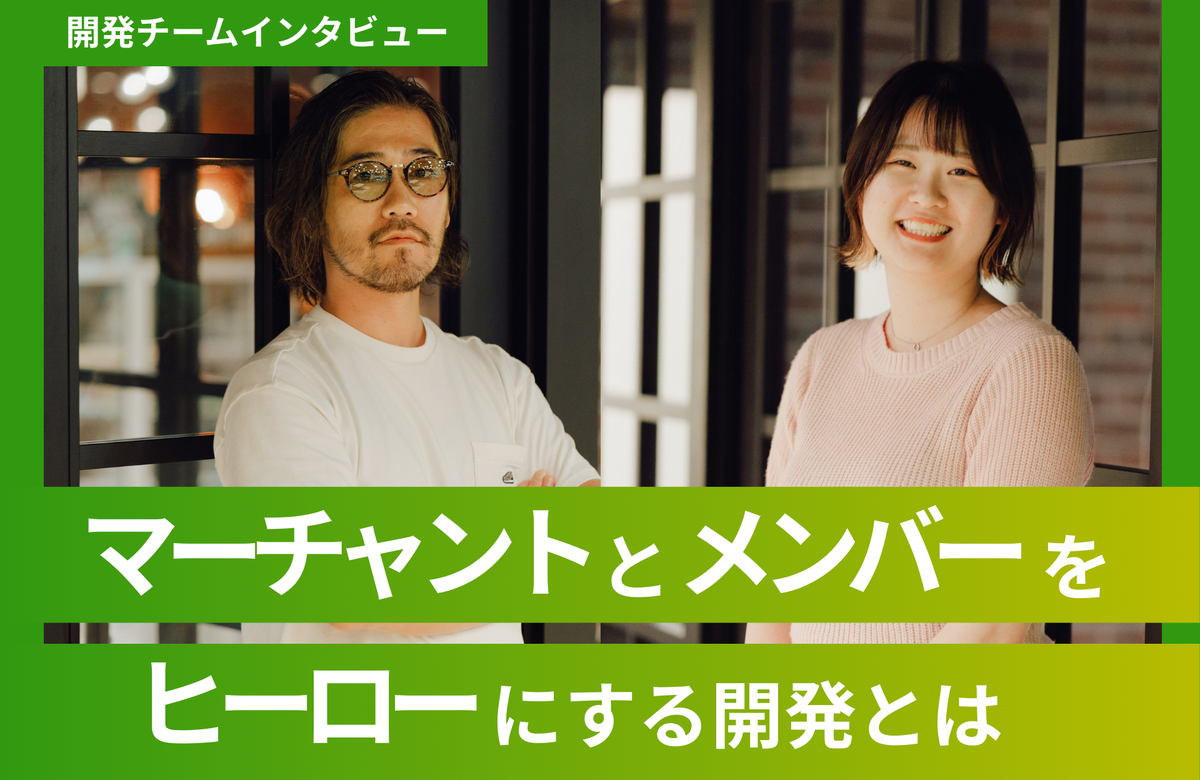
What Does It Mean to Build Technology That Makes Merchants and Growth Partners "Heroes"?
At StoreHero, "Growth Partners (GPs)" who support merchant growth using Shopify, and "engineers" who back their work with technology, coexist side by side.
In this interview, CEO Kurose sits down with engineers Yuri and Nagata from the engineering team.
They share their thoughts on the "amazing qualities of GPs" as seen through an engineer's eyes, and the rewarding challenge of transforming person-dependent "tacit knowledge" into scalable systems.
Profiles
Kazuki Nagata: A lead engineer on the development team. He drives technical challenges such as building AI (LLM)-powered quality evaluation (Evals) and systemizing complex business processes.
Maki Yuri: An engineer working on StoreHero's product development. She specializes in UX improvements from the perspective of GPs and merchants.
What Makes GPs (Growth Partners) So Impressive — From an Engineer's Perspective
Kurose: First, I'd like to ask about the GPs you support through system development on a daily basis. From an engineer's point of view, what do you find most impressive about GPs — something that AI can't easily replicate?
Yuri: In a word, it's their "love" for merchants.
GPs go directly to the merchant's site to gather firsthand information. They absorb everything on the ground — the merchant's passion, the intangible atmosphere that never makes it into text — with all five senses.
AI can only reflect back what it's told, but GPs internalize that information, truly empathize with the merchant, and then propose: "Here's what I think would work best for your business." That process carries a strong sense of will and genuine care.
Nagata: For me, it's their "adaptability" and "drive."
GPs abstract past successes and failures into patterns — but they never apply those patterns blindly. Their ability to tune and adapt those frameworks to each individual store is something today's AI still can't reach.
And rather than stalling while searching for the perfect answer, they push projects forward with an "agile mindset" — "if it gets even 1% better, let's move." That gritty determination is incredibly reassuring to watch.
The Challenge and Value of Embedding "Tacit Knowledge" into Systems
Kurose: GPs hold tacit knowledge that's hard to put into words. Translating that into a system must be an enormous challenge — how do you both approach it?
Nagata: That's the biggest wall we face — and at the same time, it's the greatest source of value in StoreHero's engineering.
In fact, even the GPs who hold that tacit knowledge are often unaware of exactly why they succeeded. Two people can have the same know-how, yet one succeeds while the other doesn't. When we dig into it, we often find that the successful person has their own unique touches they were never explicitly taught — subtle, unspoken decision-making logic.
Kurose: Exactly. Those "unconscious strengths" are what differentiate them — and if you can systematize them, they become the ultimate competitive advantage.
Nagata: Precisely. That's why we engineers must keep asking: "Why is Company A growing while Company B is stalling?"
For instance, we use a cross-functional internal dashboard to visualize the gap between success and failure. We dig into the "why" together with GPs, data in hand, and turn unconscious behaviors into explicit, codified knowledge.
Only through that process does something that was once an individual's craft become a "reproducible system." It's not something you reach by just writing code — it's creative, gritty work, and that's exactly where the excitement lies.
The Rewards and Challenges of "AI × Operational Efficiency" from a Technical Standpoint
Kurose: Beyond systematizing tacit knowledge, AI technology adoption is also accelerating. What do you find rewarding — and what are the challenges — on the technical side?
Yuri: It's incredibly satisfying when a feature I built gets actively used in the field and leads to real results.
I once worked on a multi-channel delivery feature — simultaneous distribution across email, LINE, and the app — and when GPs told me "it's being used all the time" and "our sales went up because of this," I felt genuinely glad we built it.
Nagata: For me, it's the fact that AI has dramatically expanded the scope of problems we can solve.
Traditional system development was like building one big function — you could only handle the conditional logic that humans could explicitly write in code. But with the emergence of AI (LLMs), we can now systematize niche, complex "judgments" that were previously impossible to encode in a program.
Kurose: So what's the biggest "challenge" you're facing right now?
Nagata: On the technical side, it's establishing Evals — a framework for evaluating AI output quality. You can get a demo working at a "kind of works" level pretty quickly, but ensuring the quality and stability needed for production is incredibly hard.
Using AI to grade AI output is becoming the mainstream approach, but defining the "grading criteria" — what counts as good output — ultimately comes down to humans. The process of teaching the AI to think with the perspective of merchants and GPs is our biggest challenge right now.
Yuri: My challenge is more of a mindset one: how deeply can I put myself in the user's shoes? Without holding the perspective of GPs, merchants, and ultimately the end consumers beyond them — not just a developer's perspective — you can never build something that people will actually use. There's a constant challenge and excitement in switching between those viewpoints.
Product Development as the Engine Driving Rapid Business Growth
Kurose: "Internal system development" often conjures a somewhat unglamorous image. How is building at StoreHero different?
Nagata: It's completely different from being an "in-house IT developer" who simply receives internal requests and builds tools. We see ourselves as building the "engine" that drives the business on a J-curve of rapid growth.
The StoreHero development team builds the very core of the service. Our goal is to create a product that acts like a "power suit" that extends GP capabilities — enabling a state where the business itself grows by depending on the product.
And I think engineers today need to fundamentally shift their mindset. We've entered an era where 99% of the actual coding can be handed off to AI, so simply being able to write code has diminishing value.
That's exactly why every engineer needs to think like a businessperson — to focus on "what the problem really is (problem definition)" and "how to solve it (problem solving)," digging deep with grit and curiosity. My hope is that our entire development team can make that shift.
We Want GPs to Become "Heroes" Too
Kurose: Finally, as engineers, is there anything you hope GPs will become?
Yuri: We want them to become "heroes."
Kurose: Heroes?
Yuri: Yes (laughs). By driving efficiency through the systems we build, we want to free up GPs' hands so they can move with agility. And when a struggling merchant cries out "Help!" — we want GPs to swoop in like Anpanman and solve the problem on the spot. That's the kind of presence we want them to be.
Nagata: Absolutely. By leveraging our systems, we want GPs to achieve a volume and quality of initiatives that was physically impossible for humans alone — and to deliver real results. With mutual respect for each other's strengths, I want the business side and the engineering side to deepen their collaboration and build the ultimate team.
StoreHero Is Looking for People Ready to Take on the Challenge Together
StoreHero is a company that supports merchant growth from two angles: people (GPs) and technology (engineers).
In the age of AI, we're looking for engineers who want to do more than just write code — who want to transform tacit knowledge into explicit systems and take on the challenge of building products that are at the core of business growth. We're also looking for GPs who want to use technology as a weapon to pursue the kind of value that only humans can deliver.
Will you join us in shaping the future of commerce?