
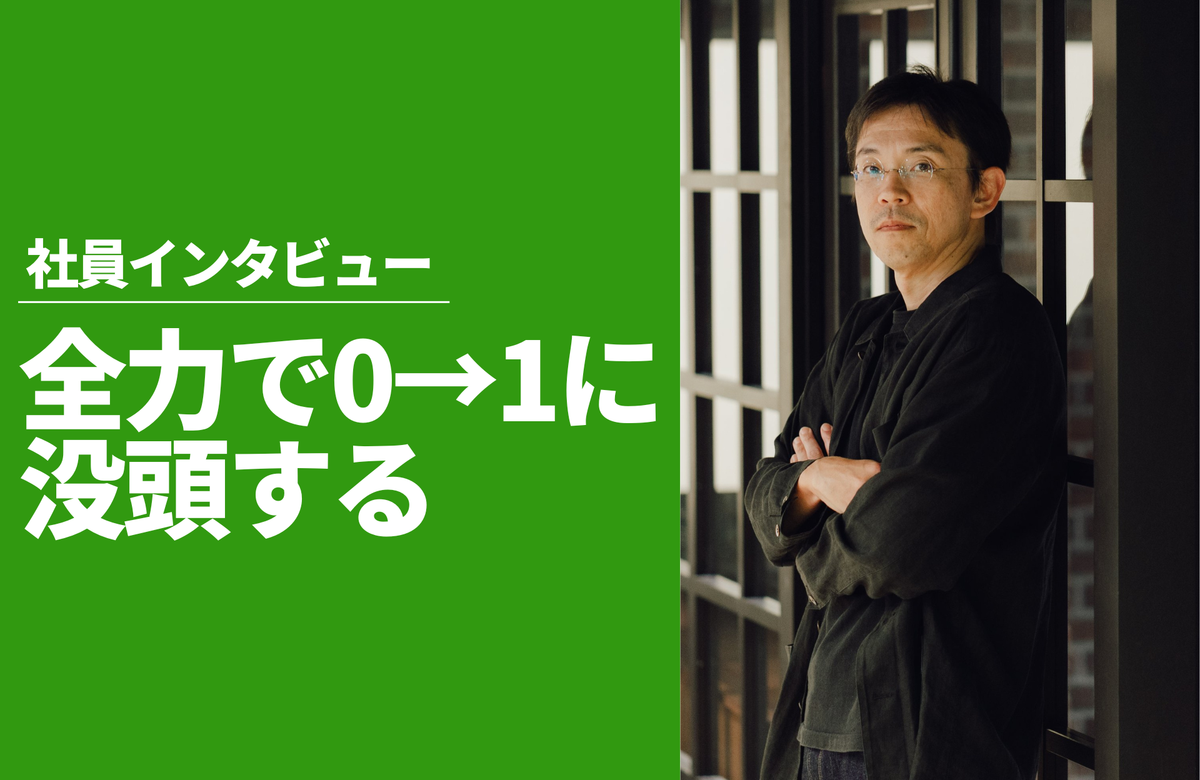
The More Technology Evolves, the More We Dive Into the Gritty Work of Building from Zero. Why We Wield "Human Touch" as a Weapon in the Age of AI
In e-commerce growth support, there is no single "right answer." Products, brand history, organizational structure, and the passion of the people involved — countless variables intertwine in complex ways. It is StoreHero's "Growth Partners (GPs)" who navigate this complexity to find the optimal solution and see it through to execution.
Takakura, who has been at the forefront as a GP since the company's founding — nearly four years — has carried the growth of numerous merchants on his shoulders while continuously channeling frontline insights into the development of StoreHero's proprietary platform.
"As tools have evolved, work has become simpler. And precisely because of that, we can now confront deeper and more difficult challenges."
These quietly spoken words carry a reality that only someone who has truly mastered the e-commerce support trenches can possess. What is the "romance" he pursues? And what is the true essence of working as a StoreHero GP? CEO Kurose digs deep.
The Commitment to Not Just Crafting Strategy, But Running Alongside Clients Down to the Very Last Detail.
Kurose: Takakura, you've been active as a GP on StoreHero's growth team for about four years. Could you start by telling us again about what your current work involves?
Takakura: Right now, I handle multiple Shopify merchants. The products vary widely — apparel, food, miscellaneous goods — and the SKU (stock-keeping unit, i.e., product count) ranges from a handful of single-item shops to several thousand. What they all share is that most of these merchants are in a "growth phase." Some run e-commerce as a division within a larger corporation, but in terms of business scale, most are companies still needing to press the accelerator harder — what you might call businesses experiencing "growing pains."
Kurose: What does the support cycle look like in practice?
Takakura: Basically, we hold weekly standing meetings where we share the current challenges and targets (KGI/KPI — Key Goal Indicators and Key Performance Indicators). Working backward from there, we plan seasonal campaign initiatives and ongoing long-term strategies, then translate them into implementation.
A GP's job doesn't end with "giving advice." Ad campaign tuning, Shopify app selection and configuration, CRM (Customer Relationship Management) scenario design, and even content planning, production direction, and implementation — we provide comprehensive support that covers the gritty hands-on work too. As of 2025, AI utilization has been added to the mix, dramatically expanding the range of initiatives we can execute.
Kurose: Monitoring the performance of multiple merchants, switching your mindset to match each one's growth phase, and getting your hands dirty. That's quite a multitasking environment.
Takakura: It is. But the key isn't just completing tasks — it's that we're committed to the goal of "business growth" for each company. Working toward revenue targets, we keep running alongside them, deploying every available tool: advertising, site improvements, CRM, and more.
Leading as an Equal "Partner," Sometimes Without Fear of Friction
Kurose: StoreHero uses the title "Growth Partner" rather than "consultant." How do you personally interpret and embody the meaning embedded in the word "partner"?
Takakura: I see a partner as someone connected through a relationship of equal trust — no hierarchy. It's neither the "order-taker" common in client-vendor relationships, nor the top-down "teacher" who dictates "this is how it should be done."
Of course, there's an aspect of supporting merchants in realizing what they want to do. But if I judge that a direction would be detrimental to business growth, I'll stop them and say, "That's not right." Not shying away from debate, aligning our understanding, and leading the project in the right direction — that's what I see as a partner's responsibility.
Kurose: Over four years of working with various merchants, have your stance or approach evolved?
Takakura: My fundamental stance hasn't changed, but I've become more flexible in adapting my "style" of engagement to each party. With ten companies, there are ten different corporate cultures and ten different personalities. Take a merchant with an extremely strong sense of brand identity and design aesthetic — here, simply pushing our logically correct answer doesn't work. Within limited resources, I value the process of working together to build out their creative vision. It feels almost like being co-conspirators in making something together.
On the other hand, for a merchant that has a strong in-house production team, there's no need for us to create the creative assets. Instead, I focus entirely on providing decision-making support — delivering quantitative data analysis alongside qualitative information like success stories from other companies — so they have the material to judge "what kind of creative will move the numbers." I play the role of the unseen hand in the shadows.
Kurose: Leveraging the other party's strengths and filling in the missing pieces yourself. And concentrating your resources on that single "critical point" where you'll have the greatest impact.
Takakura: Exactly. Doing everything myself is physically impossible, so I'm always thinking about reading the other party's situation and figuring out where I can insert myself to create the most leverage.
The Paradigm Shift Brought About by Platform Evolution
Kurose: Over these four years, StoreHero as a company and its environment have changed dramatically. What kind of changes have you noticed, particularly in how work gets done?
Takakura: In a word, work has become "simpler." This doesn't mean it's become easier. The growth platform StoreHero has developed, along with the knowledge that's accumulated internally, has advanced dramatically — and what previously relied on individual craftsman-like expertise has been standardized as a system.
For example, complex data analysis, Shopify app configuration, and building basic CRM initiatives can now be executed by anyone at a high level — and in a short time — using the tools we have. Previously, a lot of time was consumed by these things, but now we can dramatically compress that man-hours.
Kurose: The real implication of things becoming "simpler" seems to lie in what you do with the time you've freed up.
Takakura: Exactly right. Thanks to the efficiency gains from tools and AI, we now have more time to confront "the fundamental challenges that only humans can handle — the ones that resist quantification." In the past, our mental bandwidth was consumed by the "How" — how to set up ads, how to configure email delivery. Now we can dive deep into the "Why" and "Humanity" — why isn't this product selling? What is this brand's true appeal? How do we raise the passion of the person in charge?
Kurose: I see. So the more technology evolves, the more a GP's work paradoxically becomes human and gritty.
Takakura: Yes. Chasing numbers online is something AI can do. But sitting face-to-face with a merchant, feeling the atmosphere of the field, reading the emotions and context behind their words, and translating all of that into strategy — that's something only humans can do.
When I say things became "simpler," I mean the unnecessary noise has been reduced, and we now have an environment where we can purely immerse ourselves in "the excitement and difficulty of commerce" — which is what we should have been facing all along. Because our skills have improved, we can now see deeper challenges that we couldn't see before, and we can actually go and solve them. The difficulty level has risen, but so has the fun.
The Exhilaration of the Moment Zero Becomes One
Kurose: Tell me specifically about the moments when you feel a sense of "fulfillment" as a GP.
Takakura: To be honest, most initiatives don't work out. But that's precisely why the joy of getting through the hard times together and seeing results is like nothing else.
What stands out most in my memory is a merchant I've been in charge of since their launch. At first, things really didn't sell. The store existed, but customers didn't come, didn't buy. I still remember the heavy atmosphere of that time. But without giving up, we kept debating with the merchant and built a hypothesis: "this might work." We crafted a single carefully made landing page (LP) and ran advertising against it. The moment we launched that promotion, the numbers that had never budged suddenly started moving — products began to sell.
Kurose: That's truly a zero-to-one moment.
Takakura: Yes. Witnessing firsthand when "0" becomes "1" and then eventually "100" — I simply shook with excitement. It was thrilling. But what made me happiest was that the merchant gained confidence: "What we've been doing, what we've believed in — it wasn't wrong after all."
Kurose: When sales start climbing, does the atmosphere at the client's end change?
Takakura: It changes completely. "Let's develop things further this way next" and "Maybe we can roll this out to that product too" — the discussions become forward-looking and constructive. Of course, there's no guarantee the next initiative will hit. But because we've shared a success experience once, there's trust that "we can overcome this together again." Building on that trust, we challenge even higher mountains. That repeating process itself is my greatest source of fulfillment.
On the "Romance" of Transcending Individual Limits and Pursuing Reproducibility
Kurose: Takakura, in an internal interview some time ago, you described your work with the word "romance" (romantic ambition). Could you tell me again what you meant by that?
Takakura: My romance is creating a reproducible state where "no matter which merchant comes to us, no matter what the product, we can always drive growth." The world of e-commerce support tends to become highly dependent on individuals. Rather than "it grew because that amazing person was in charge," I'm aiming for a state where anyone can achieve results using the StoreHero system.
Kurose: And to that end, you keep feeding your frontline experience back into the platform.
Takakura: That's right. I alone can handle perhaps ten companies at most. But if I take the "seeds of success" and "lessons from failure" that I've sweated to earn in the field and embed them into the StoreHero platform as a "system," those become a weapon for every new member who joins. Converting "a craftsman's tacit knowledge" into a "system" and democratizing it — that way, the number of merchants our entire team can support grows to 100, to 1,000.
Kurose: Not just excelling as a player yourself, but building a system that elevates the entire team's level. That's where another dimension of fun lies for a GP.
Takakura: Yes. Compared to four years ago, our team has grown, and seeing the new members who've joined smoothly get up to speed — using the know-how we worked so hard to accumulate right from the start, and achieving results — that genuinely makes me happy.
There are limits to what one person can do alone. But when you combine team and system, you can leave a much greater impact on the world. While I continue to sharpen my own individual capabilities, I simultaneously install those capabilities into the organization. Spinning those two wheels together — that's my challenge and my romance right now.
A Message for Those Who Aspire to Become a StoreHero GP
Kurose: Finally, do you have a message for those who aspire to become a StoreHero GP?
Takakura: StoreHero's environment has become incomparably better than it was four years ago. We have a powerful platform and systematized knowledge.
But what I don't want people to misunderstand is this: "it doesn't mean the work gets easy." As the weapons have become more powerful, what's required is the human capability and thinking power to use those weapons to "cut into the deepest, most essential challenges."
"Use a tool and sales will go up" — that's not how it works. Can you use tools to think through, in a gritty and relentless way, how to give shape to the aspirations of the merchant in front of you? Even when things don't work out, can you stay by the merchant's side — without running away — worrying, thinking, and continuing to act?
For those who can enjoy that "reality of commerce," this is the best playground and the finest stage for growth you'll find. I look forward to working with people who can wield both technology and gritty human capability as their weapons, and chase "romance" together with us.