
Leveraging eGifts for Growth: A Conversation Between AnyReach CEO Nakajima and StoreHero CEO Kurose
The use of apps that offer eGift functionality — also known as social gifting — is growing rapidly on Shopify.
More and more commerce businesses that StoreHero supports for growth are utilizing eGift apps as part of their growth strategy, and we continue to explore the most effective ways to put them to use in our day-to-day growth work.
This time, we sat down with Konosuke Nakajima, CEO of AnyReach Co., Ltd., the company behind "AnyGift" — one of the most well-known eGift apps on Shopify — to discuss eGifting and AnyGift in depth.
We hope this conversation will be a valuable reference for Shopify merchants who are considering adopting eGifts or looking for more effective ways to use them.
— Could you introduce AnyReach and tell us what inspired you to start the company?
I founded the company with the vision of building a service that would become a global commerce platform. At my previous job at Mercari, I worked on app growth, CRM, and new business development. Through that experience, I became convinced that e-commerce is an incredibly exciting space with limitless potential, which led me to start AnyReach.

— AnyGift has been gaining widespread adoption. Could you give us an overview of the service?
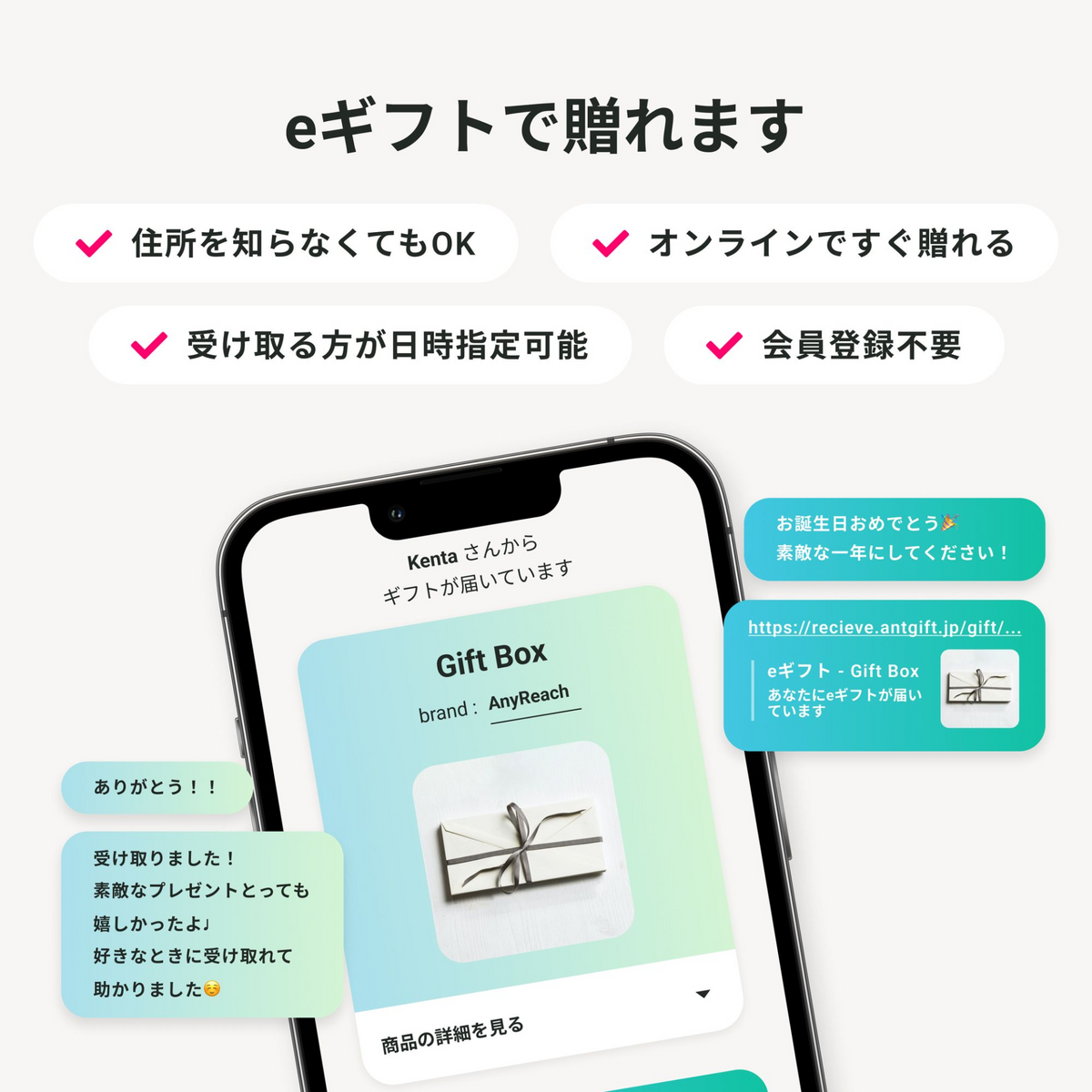
We provide an app that embeds eGift functionality — what's often called social gifting — directly into e-commerce sites, making it easier for customers to purchase and send a merchant's products as gifts. Even without knowing the recipient's address, customers can send gifts seamlessly, and merchants can integrate this feature with virtually no coding required.
— What drew you to focus on eGifts?
A personal experience that stuck with me was the realization that while there are so many great products out there, people often don't have a way to discover them. On the other hand, I've come across many brands and products through gifts I received, and I've had friends tell me the same thing. I thought that if we made it easier to send gifts, the people who receive them might start buying on their own — or become gift-givers themselves — which would ultimately help spread great products throughout the world. That's where I decided to start.
— Could you share some representative examples of merchants using AnyGift?
Paul & Joe, which StoreHero also supports, is one example where we're seeing steady results. Cosmetics, beauty, and food products tend to be a natural fit. Other merchants using AnyGift include John Masters Organics, Chochomusubi (a fruit gift company), and Minimal, a chocolate brand.
— Have there been any unexpected or surprising ways merchants are using it?
Recently, shoe brands have started adopting AnyGift. Shoes are typically hard to give as gifts because of sizing, but with AnyGift's system, recipients can choose their own size and color — so even shoes work perfectly as a gift.
— That's a great point. For something like running shoes, you could frame it as "Want to go for a run together?" — making it a gift that both the sender and recipient can enjoy together. Since it's called "social gifting," if the brand experience is designed to be shared with others, even products that wouldn't normally be given as gifts could generate gifting demand.
In our growth support work with Shopify merchants, we've been using eGifts, and it's been incredibly helpful that we can now capture not just demand from people buying for themselves, but also demand from people buying for others.
Thank you — I completely agree. But as you mentioned, the joy of giving to someone is something that merchants really need to proactively communicate. It's important to convey messages like "your recipient will love getting this as a gift" or "you can both enjoy this together" — that kind of intentional storytelling matters a great deal.
Once you move beyond self-purchases, the number of potential purchases can increase from 10 to 100 and beyond. And gifting opens the door to products that someone would never buy for themselves.
By capturing gifting demand on top of regular sales, you can create entirely new revenue streams — and that's a direct path to growth.
— What types of products are best suited for eGifts?
Products and brands with a strong story or message tend to be a great fit. For example, one leather brand we work with has built their messaging around the idea of experiencing the aging and character of leather together over time — sharing that journey as a pair. When a brand carries that kind of meaningful narrative, sending the product as a gift becomes a way to deliver the message along with the product itself.
Products that give the recipient a choice also tend to work well — similar to Amazon gift cards or traditional catalog gifts that have been around for years. Sometimes the sender knows which brand they want to give and has a general idea of the product, but isn't sure which option the recipient would prefer most. Being able to let the recipient choose ensures they get exactly what they want. With gifts, if you get it wrong, the recipient might have preferred nothing at all — so removing that worry makes it much easier to give.

— In our growth support work at StoreHero, we also start by thinking carefully about who the target audience is. So it's important to consider whether the messages a brand is putting out resonate with the kind of person who would want to send a gift.
When thinking about where eGifts fit into the growth workflow, one opportunity I think works particularly well is around new product launches.
The moment someone buys a new product early and loves it is when their excitement is at its peak — so that's a great time to suggest sharing that joy with others through a gift.
I agree completely. Another opportunity is during peak gifting seasons like Christmas — reaching out to gift recipients at that time can be very effective. New product gifts tend to create a ripple effect, so there's real potential in following up with something like "How about sending this as a birthday gift to someone next?"
— This is a bit different from eGifts, but I've been wondering whether this could also work for group buying scenarios. Volume discount sales often attract groups of people who pool their purchases together. Combining eGifts with volume discounts could eliminate the hassle of physically handing products over in a group buy — you could just send payment via QR code, for example.
That's an interesting idea. Rather than a volume discount, it could even become a "gift discount" — a way to offer incentives without undermining the brand's premium positioning.
— Nakajima-san, thank you so much for your time today. Let's continue working together to expand the world of eGifting.